
Gear guide · The whole kit
Everything I carry
Everything I carry, and why. One body and a second that is always on me, the long lens the bear photographs were made with, the drone that needs written permission, and the gimbal, bags, drives, light and power around them. The rules of the places I go chose a lot of it: no tripods on the skiffs, no carry-on on the floatplane, no outlet after the generator stops.
My own kit, carried on the trips on this site.
Gear links go to the retailer. I only link gear I have used.
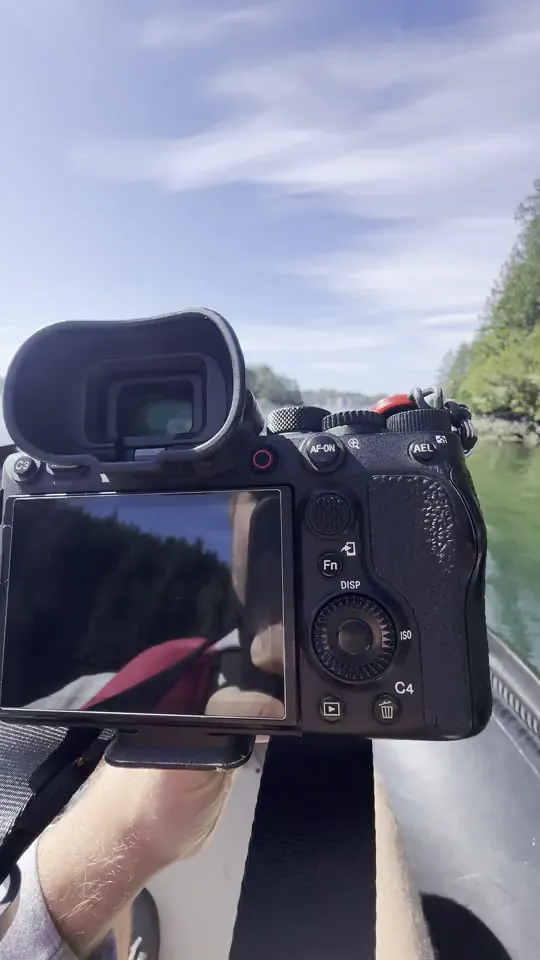
The body
-
Sony A1
One body for everything on this site. Resolution for the bears at distance, where you crop anyway, speed for the birds, and it does not mind rain.
-
Pergear 1TB CFexpress Type A card, two of them
Two of them, one in each slot. Most of these places have no wifi worth the name, so the cards have to hold the week.
-
Sony NP-FZ100 battery
Two originals as spares. The body does not come back to the charger until dark.
-
SmallRig NP-FZ100 USB-C battery
What I would buy as spares today: USB-C chargeable, from a reputable brand like SmallRig, so they fill in the bag off the power bank.
-
Sensor cleaning kit for the A1
Lens changes on a beach put debris on the sensor. Every so often, carefully, this gets it off.
-
Macolink glass screen protector for the Sony A1
A sacrificial cover for an expensive camera screen. It has already saved the camera once, when I slipped and dropped it on rocks at Hot Springs Cove, out of Tofino, on an assignment for Ahous Adventures.
-
Kiwifotos soft long eyecup for the A1 (FDA-EP19L)
A longer, softer eyecup. Side light off the water is the reason.
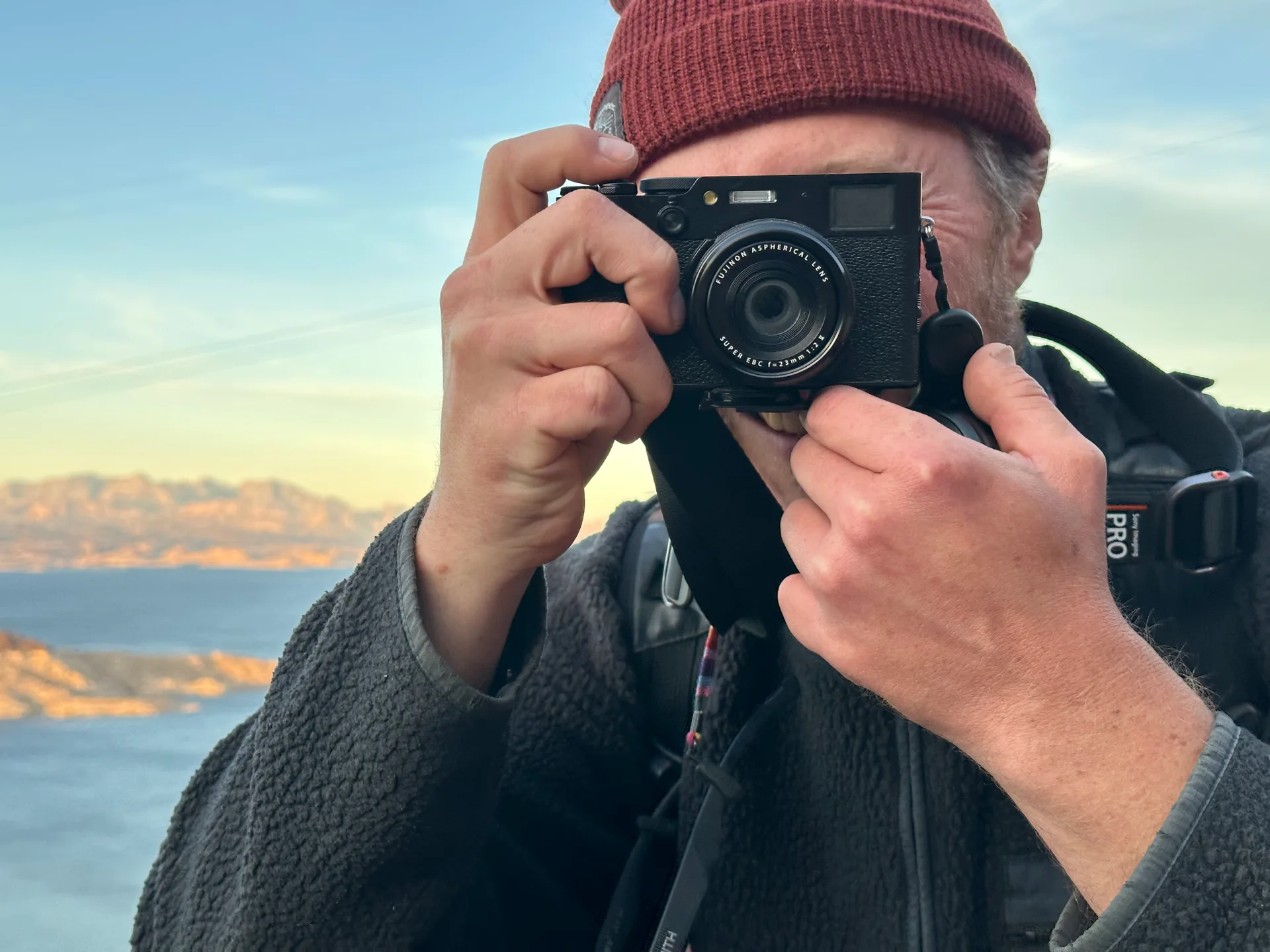
The second camera, always on me
One fixed lens, one pocket, and it comes everywhere the A1 does not.
-
Fujifilm X100VI
Always on me. Great for tighter spaces or when travelling lighter: no lenses to swap out, no sensor to get dirt on.
-
Screen protector for the X100VI
It lives in a pocket. Glass on the screen.
-
K&F Concept NP-W126S battery, 2-pack, USB-C
Two spares that charge over USB-C, off the same cable as everything else.
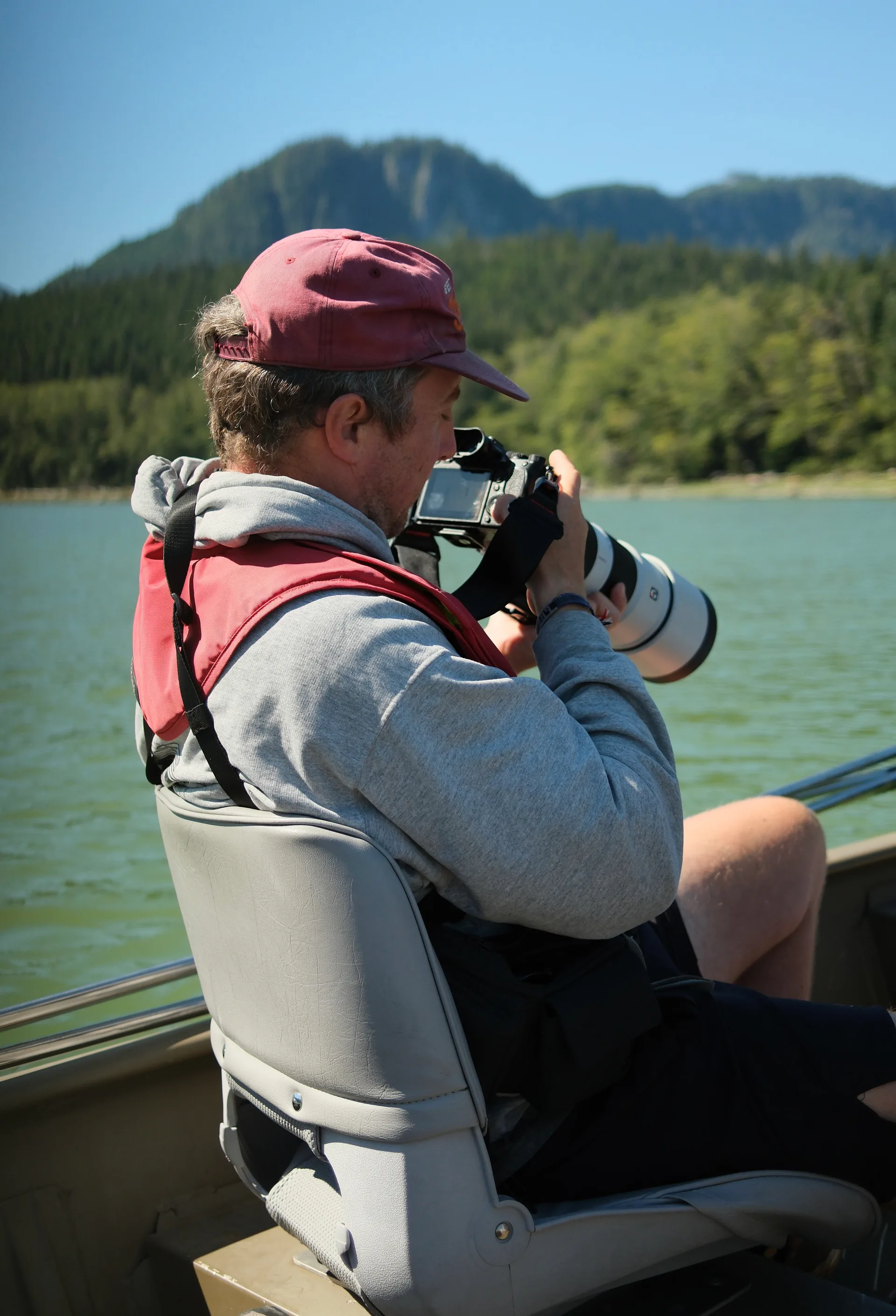
The long end, which is the point
Bears, whales, birds: everything worth this lens is far, and the rules keep it that way. The photographs are better for it.
-
Sony FE 200-600mm f/5.6-6.3 G OSS
The lens the bear photographs were made with. Long, and light enough to hand-hold from a skiff rail all morning, which you have to, because tripods are not allowed.
-
Sony 2x Teleconverter (SEL20TC)
On the 200-600 it makes 1200mm. Perfect for bears, birds and marine wildlife at the distance you are kept at. Slower to focus, and worth it.
-
iShoot Arca-Swiss replacement foot for the Sony 200-600
An Arca foot in place of the stock one. The lens drops straight onto a clamp, on the rail or on a monopod.
-
K&F Concept 95mm UV filter
Glass in front of the front element. Six and a half metres of rain a year, some of it sideways.
-
MR.SIGA microfibre cloths, 12-pack
Salt spray on the front element, wiped off with a glasses cloth. Twelve of them, everywhere.
-
JJC extra-large padded lens pouch
The 200-600 flies in the duffel, in this. Padded, and it counts toward the weight limit.

The short lenses
Small, fast, and between them they cover everything that is not a bear: the lodge, the dock, the people, the dinners, and the sky at night.
-
Sony FE 35mm f/1.8
Rooms and cabins and the dock at dusk. Lives in a jacket pocket.
-
Sony FE 85mm f/1.8
Guides and guests. The lens that makes the crew look the way they deserve to.
-
Sony FE 14mm f/1.8 GM
The wide angle, for the rooms and the decks, and the lens for starry skies.

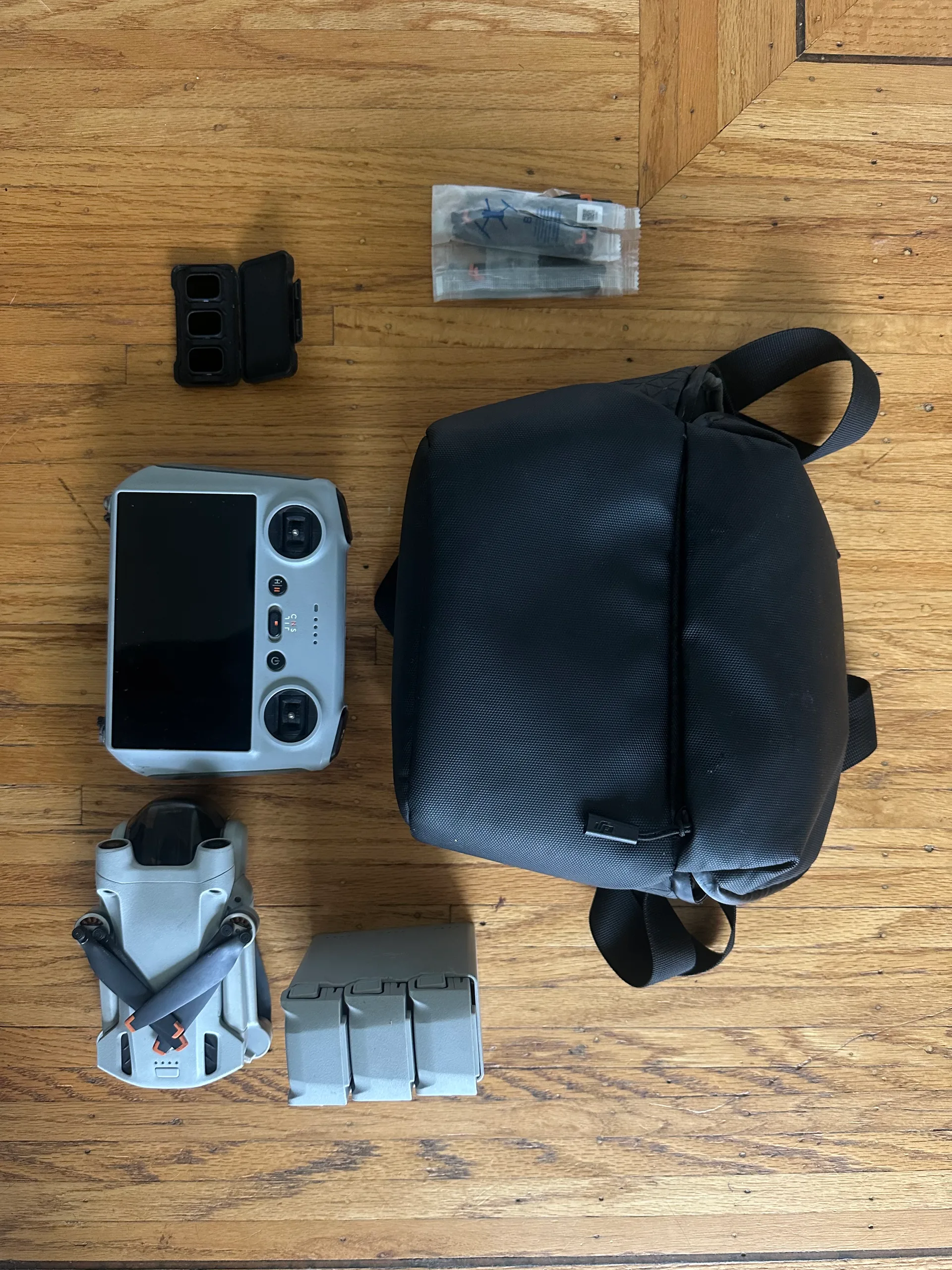
From the air, with permission
The aerials on this site come from a sub-250 g drone. Read the rule below before you pack one; at most places the answer is no.
-
DJI Mini 3 Pro
What most of the aerials were flown with. Since replaced.
-
DJI Mini 5 Pro
The current one. Same class, same rules apply.
-
K&F Concept UV filter for the DJI Mini 3 Pro
Waterproof glass over the drone lens. Salt air on the coast.
-
SanDisk 128GB Extreme microSD
The card in the drone.

Holding it steady
Some places do not allow tripods at all; Knight Inlet bans them in the skiffs and on the stands. So this section starts with the gimbal, and the tripods are for the places that allow one.
-
DJI RS 3 Mini compact gimbal
A compact gimbal, carried for the A1. Works great with the two primes; it is not meant for the 200-600 and does not pretend to be.
-
PGYTECH Quick Release Plate & Clamp V2
One Arca-Swiss plate on the camera, one clamp on everything else. No tool, no fumbling on a wet dock.
-
Ulanzi & Coman carbon fibre tripod
Where tripods are allowed, this is the one I recommend. Carbon fibre, so the floatplane weight limit survives it.
-
Peak Design Travel Tripod
The Peak Design equivalent. Either one.
-
Ulanzi TT35 hiking stick tripod kit
A carbon hiking stick that splits into a monopod or a small tripod. On the trails it is a stick; where the rule is no tripods, the monopod half still counts.
Carrying it
-
WANDRD PRVKE 31L
The camera backpack: the A1, the primes and the laptop, with the long lens in its pouch on top.
-
f-stop Shinn 80L
The big one. Eighty litres around a camera insert, for when the whole kit walks in on my back.
-
WANDRD HEXAD Access 45L
The carry-on for everything else. Mine is the HEXAD Access 45L, no longer made; the link is to the Transit Travel Backpack 45L, its nearest current equivalent.
-
Ulanzi 13L camera sling bag
The day bag. Three-point crossbody, MOLLE yoke, 13 litres, which is a body, the primes and the small things.
-
Peak Design Leash camera strap
I love the Peak Design straps. The Leash, in sage, on every body I own.
-
tomtoc 10L laptop messenger bag
The laptop bag. Fits the 13 or 14 inch MacBook; there is a 13 inch version for the 12.9 inch iPad Pro.
-
tomtoc electronics organiser
Cables, cards, batteries, earbuds. Everything small, in one water-resistant place.
-
Pelican cases, various sizes
Various sizes, for skiffs, floatplanes and the back of the truck, whenever a bag is not enough.
Monitor and power
At most lodges the power stops when the generator does. The evening charge has to be quick and cover everything at once.
-
Portkeys LH7C 7-inch field monitor
Seven inches and 1000 nits, so it reads in daylight, with wired control of the A1.
-
SmallRig 3500mAh USB-C NP-F battery
The battery for the monitor. USB-C, so it shares a charger with everything else.
-
Anker Prime 6-in-1 USB-C charging station, 140W
Six things charging off one outlet, at 140W. The whole kit is full before the generator stops.
-
Anker 140W 4-port GaN charger
The wall charger. Four ports and 140W in something that fits the tech pouch.
-
Anker 100W power bank
100W out, so it runs the Starlink Mini or charges the laptop, not just the phone.
-
EcoFlow River 2 portable power station, 256Wh
256Wh of LiFePO4 for after the generator stops, and for the camps that never had an outlet.
-
Anker SOLIX F2000 power station
For the RV, and for demanding off-grid shoots. The light, the laptop and every charger at once, for days.
-
ALLPOWERS 600W folding solar panel
Folds flat and refills the F2000 from the sun, which is what makes days off grid into a week.
Light
For the rooms and the dining tables, when the window is not enough.
-
Aputure Amaran 200x S bi-colour LED
2700 to 6500K, so it matches the lamps or the window, and it runs off mains or DC.
-
Godox TT600S speedlite
The small flash, for when the big light stayed in the van. Manual, GN60, radio built in.
-
Godox X2T-S flash trigger for Sony
Fires the speedlite from wherever it is standing. Bluetooth to the phone for power changes.
Computers, cards and drives
Three copies of everything before a card is formatted: two SSDs and one spinning drive, in different bags.
-
MacBook Air M4
The trip laptop. Light, silent, and it runs off the power bank.
-
MacBook Pro 16-inch
The desk, when the desk is the van: the tours and the edits.
-
iPad Pro 12.9-inch
For showing a tour to a client on the dock, and as the second screen in the van.
-
Sony MRW-G2 card reader
The reader that gets two terabytes off the A1 cards at the speed they were bought for.
-
SanDisk 4TB Extreme portable SSD
Where the cards go every evening. Copy one.
-
Crucial X9 4TB portable SSD
Copy two, on a different drive.
-
5TB portable hard drive
Copy three. Slow and cheap, and it travels in a different bag from the SSDs.
On the road
Most of these places start with a long drive to a dock. The van does the first round of charging.
What I wear
Always in the bag, whatever the trip. The coast is wet, the water is cold, and most of these places have a sauna or a tub and a beach to walk into after it.
-
Burton GORE-TEX rain jacket
The shell, always. GORE-TEX, big hood.
Amazon · REI · Backcountry
-
MEC rain pants
Over everything on a skiff day.
-
Water shoes
Wet landings and barnacles.
-
Sandals or flip flops
Dock, sauna, cabin.
-
Quick-dry t-shirt
Cotton stays wet all day on a boat; this does not.
-
Fleece shirt and sweater
Two fleece layers. The morning on the water and the afternoon on the deck are different seasons.
-
Quick-dry towels
Dry by morning, and it weighs nothing.
-
Swim shorts
For the plunge after the sauna.
-
Wetsuit
For staying in past the first minute. Nine degrees is nine degrees.
-
BLACK+BLUM insulated steel bottle, 850 ml
The bottle. 850 ml, cold for a day, hot for half of one.

Safety and signal
The iPhone 14 Pro has emergency satellite messaging built in, which covers the worst case. These cover the rest, and the small things that go wrong before it.
-
weBoost Drive Reach RV cell signal booster
In my RV, for a usable signal on the way into remote areas. It turns one bar into a call; it does not make signal where there is none.
-
Starlink Mini
For the RV and for remote shoots, where the booster has nothing to boost. It runs off the power bank. Check with the lodge first: some of them are off the grid on purpose and would rather you were too.
-
Garmin inReach
Sometimes activated, for the trips that need two-way messaging and an SOS button.
-
ZOLEO satellite communicator
The other one I sometimes activate. Same job, a plan you can pause.
-
Nitecore USB-rechargeable headlamp
Cheap Nitecore headlamps from Amazon, all USB-chargeable. Several years of rain and shine, still going.
-
A good first aid kit
A good one, checked before each trip. The nearest help is a boat ride away.
-
A small toolkit
Hex keys and a screwdriver or two, for the tripod and gimbal screws that work loose.
Not in the bag yet
Two things I want and have not bought. Listed so you know the difference between what I carry and what I covet.
The rules that chose the kit
Read before you pack
- Tripods: ask first
- Knight Inlet does not allow tripods in the skiffs or on the viewing stands, and it is not alone. A beanbag on the rail, a monopod, or your elbows. Plan the lens weight around that.
- The flight in has a weight limit
- Floatplanes and helicopters both weigh your bag, and on a floatplane Transport Canada rules mean nothing on your person beyond what fits the seat pocket. The camera and the long lens fly in the duffel, inside the limit. That is where a second long lens loses to the first.
- Drones: assume no
- Most lodges will not allow drones at all, and Knight Inlet prohibits them during the season under its environmental management plan. I flew with special permission, for the lodge, and stayed well clear of any wildlife. If you do not have that permission in writing, leave it at home.
Where it was carried
The trip behind it
-
 From the Journal Orca Camp: the comfortable way to sleep on a beach Read the story
 -
 From the Journal Cold water, bright life: my week at God's Pocket Read the story
 -
 From the Journal The Salmon Clock: my autumn at Knight Inlet Read the story
 -
 From the Journal Two lodges above the treeline Read the story
4 experiences in this story
Availability request · reviewed by a person