A humpback exhales half a kilometre away and you hear it before you see it, a pressurised sigh rolling across flat water, arriving at kayak height because you are at kayak height, eighteen inches off the surface with a paddle going quiet in your hands. I have filmed whales from boats, from drones and from shore, and nothing I own captures what that sound does to a group of paddlers. Whale watching from a boat is spectating. From a sea kayak it is being, briefly, a fellow resident.
Spirit of the West Adventures has run this coast from Heriot Bay on Quadra Island for more than twenty-five years, and I spent a week embedded with them, camera in a dry bag and drone launching off beaches, making their film.
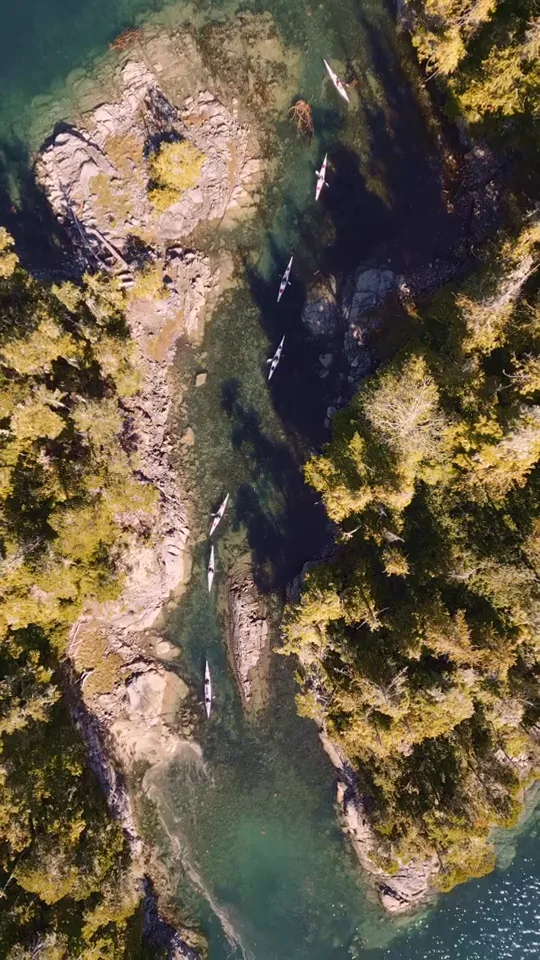
Whale watching from a boat is spectating. From a sea kayak it is being, briefly, a fellow resident.
Their British Columbia season splits into two honest categories, and I got to shoot both. Base camps are established sites where you day-paddle out and return each evening. Expeditions keep faith with the older tradition: everything in the hatches, camp moving daily, routes through the Broughton Archipelago, Desolation Sound, Nuchatlitz and an eight-day line through the Great Bear Rainforest.

The base camp bargain
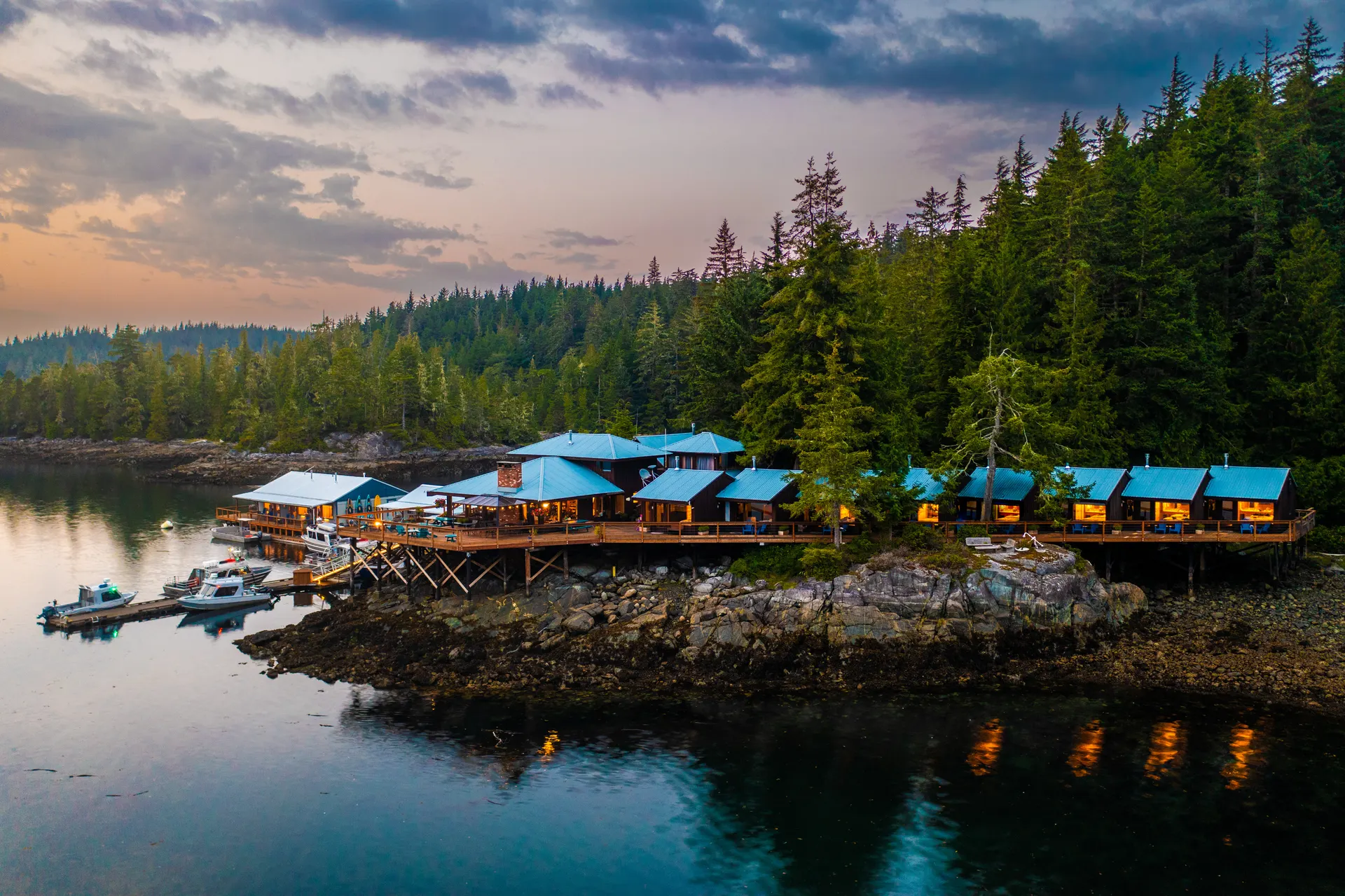
Walk-in safari tents with real beds, a cook shelter producing food that has no business coming off a camp stove, and, at the flagship camp, a cedar hot tub at the water edge facing the channel the whales use.
Yes, whales have surfaced mid-soak. It is the detail everybody repeats afterwards and the one that most reliably ruins ordinary camping for the people it happens to.


Real beds, and a deck
The arithmetic of a base camp is simple: nothing between you and the strait but trees, and a bed you did not have to inflate.
Dusk in camp. I took this one instead of joining dessert, a decision I still defend.

Morning
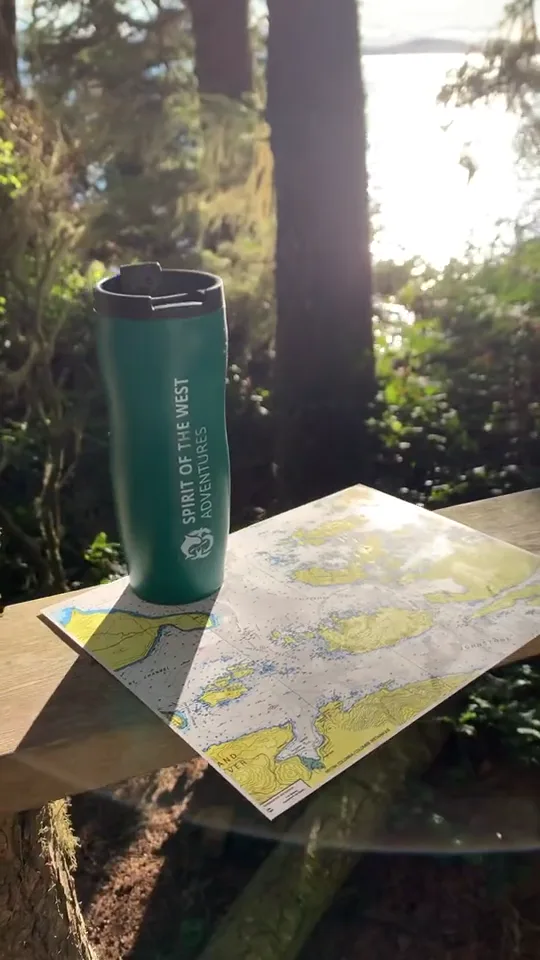
Coffee, a chart, and the water
The day starts on a table over the water: a mug, the chart of where the kayaks are going, and the strait deciding whether it agrees.

The whales run the encounter
The whales run the encounter and you are grateful.
Field note

The food got its own camera card
A camp cook plating a dozen salads on a timber counter in the trees. Grilled prawns appearing at a folding table on a beach the tide would reclaim by dinner. A spread of bread, cured meat and fruit that turned a gravel bar into a restaurant with the best terrace on the coast.


The open-air kitchen at full production
There is no mains power behind any of it and no second delivery. Everything came in by boat, and it still arrives at the table looking like this.
Dinner, night three. At this point in a trip people have stopped photographing their food, which is how you know the week is working.
After the paddle
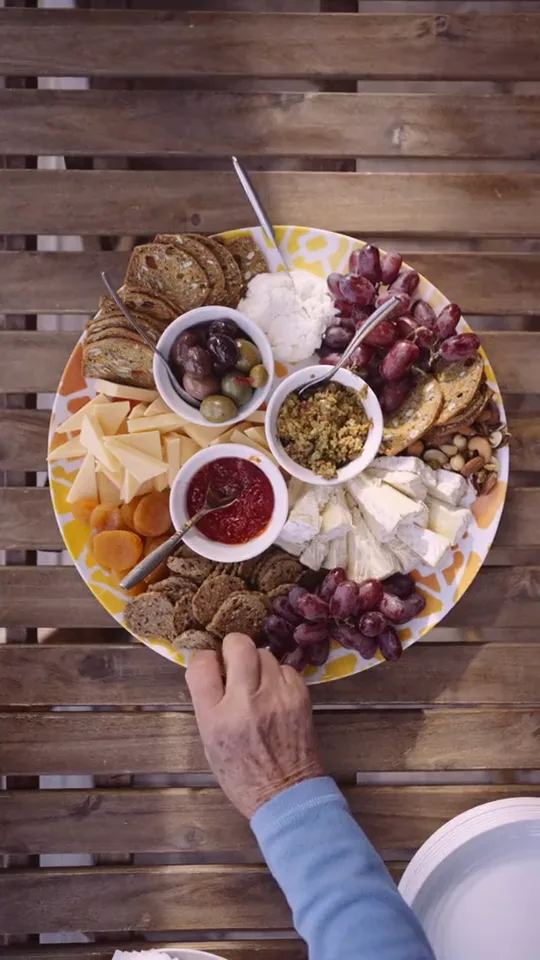
The board
It comes out when the boats are up and the wet gear is off, and it is gone before anyone has changed. That is the timing of it, every day.


Night one at the fire table is the point at which a boatload of strangers quietly becomes a group. Every guided trip has that moment; here it happens early.

Trips run late June to late September and the whale weeks go first. Rain is not a cancellation criterion. This is a rainforest coast and the gear list assumes it. Wind is respected absolutely, which is why itineraries are published as intentions. Somewhere in the middle of a crossing, engineless, with a fin rising ahead of the bow, you will understand why nobody hurries here.
The 360 degree tour of the base camp lets you stand in the tents, the kitchen and the hot-tub deck before you commit.