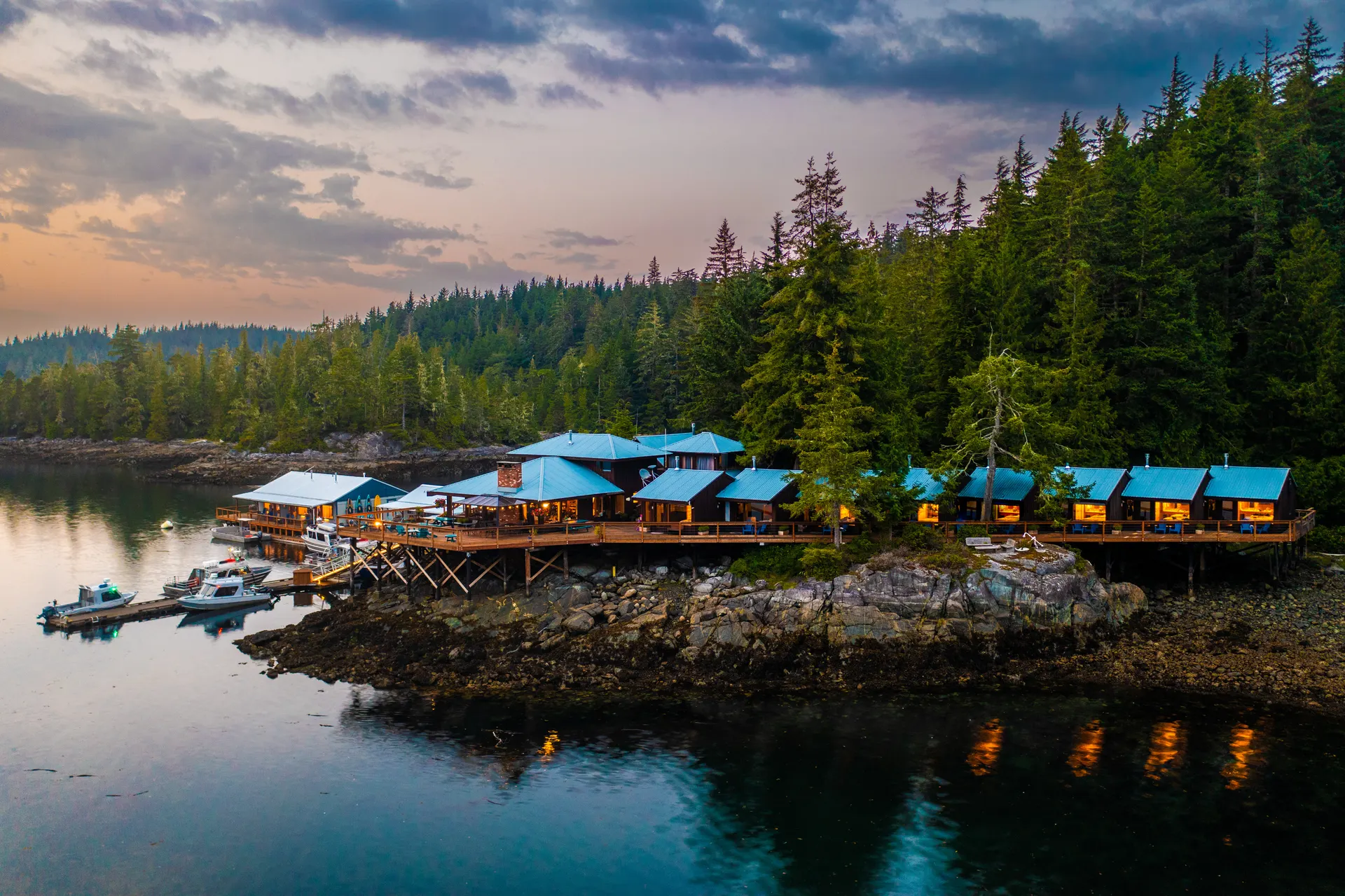
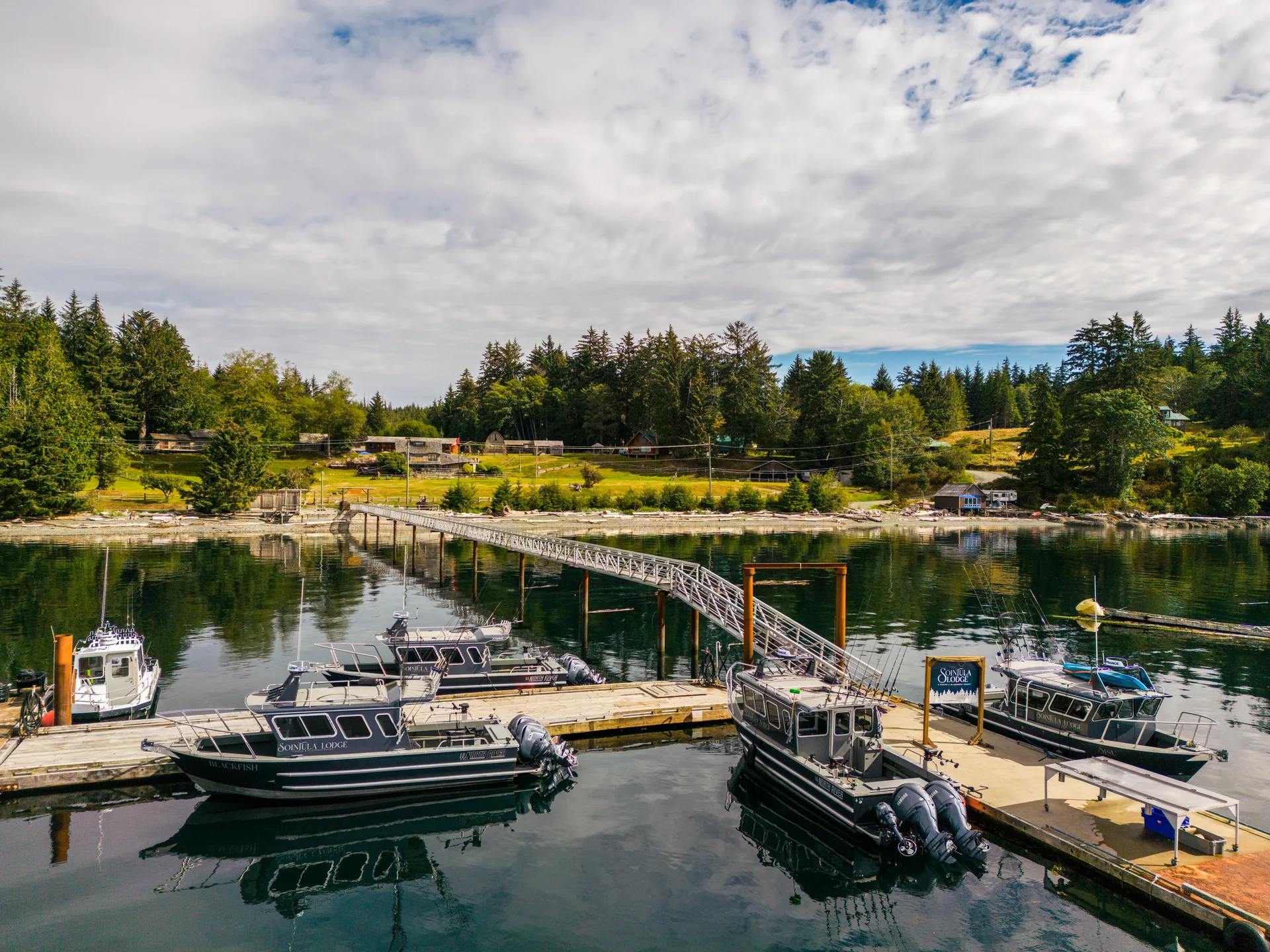
Robson Bight, the Michael Bigg Ecological Reserve, is a bay and a length of gravel shoreline on the south side of Johnstone Strait. It has been a reserve since 1982 because the northern resident orca come there to rub their bodies on the smooth stones in the shallows. It is the only reliable rubbing-beach complex known anywhere. Whales travel to it the way people travel to a hot spring.
Wildcoast Adventures pitches its camp right beside it, and in August they asked me up for four nights to give the place a fresh look: a full 360° virtual tour of the camp, aerials of the beach and the strait, and the people who make a week there what it is.

You cannot drive here and you cannot leave early. That single fact does more for a trip than any amount of thread count.
The morning was easy in a way I had not expected. Parking at the Campbell River dock is free, check-in at the office took about four minutes, and there was coffee at the briefing. We left in sunshine on a flat sea. The one instruction that stuck was to wear shoes we did not mind soaking, because there is no dock at the other end and the last twenty metres are done in a rowboat.
I had the camera out before we cleared the harbour. Two and a half hours later I was standing on a pebble beach in wet shoes, watching my bags come ashore.
The camp
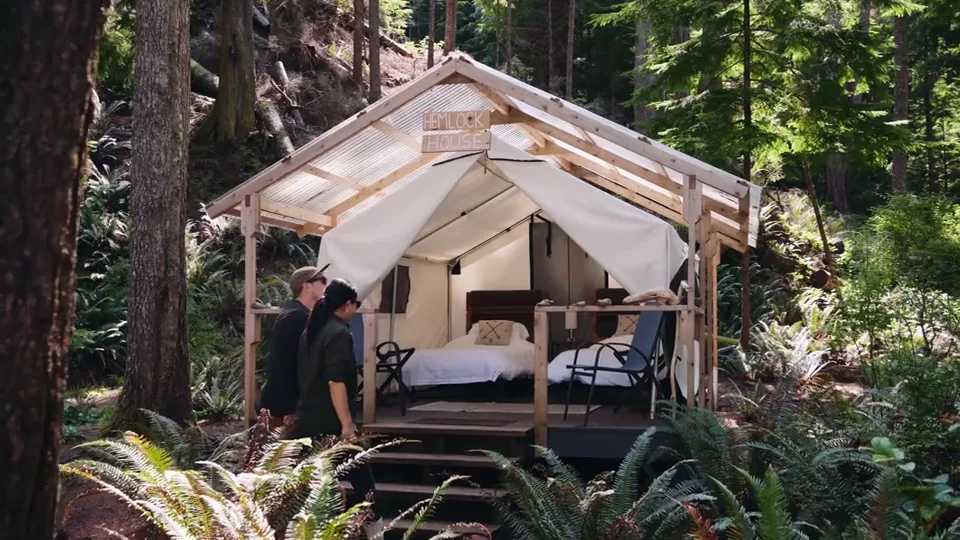
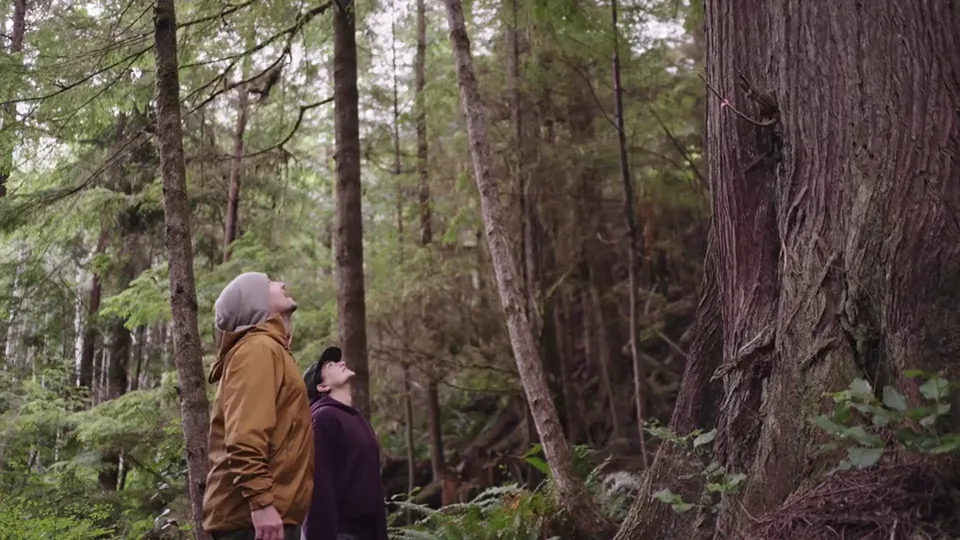
The camp is built in the gaps between old-growth hemlock and cedar, which is why it disappears from the water. You pass it at half a mile and see trees.


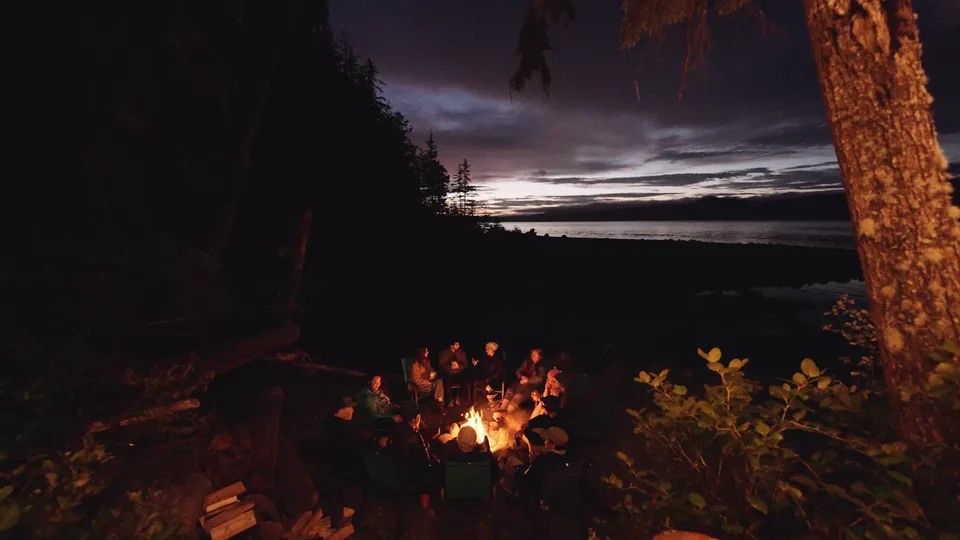
Mornings came in misty and moody. The evenings paid it all back with sunsets I would have flown a long way for.
Heat, and where it comes from
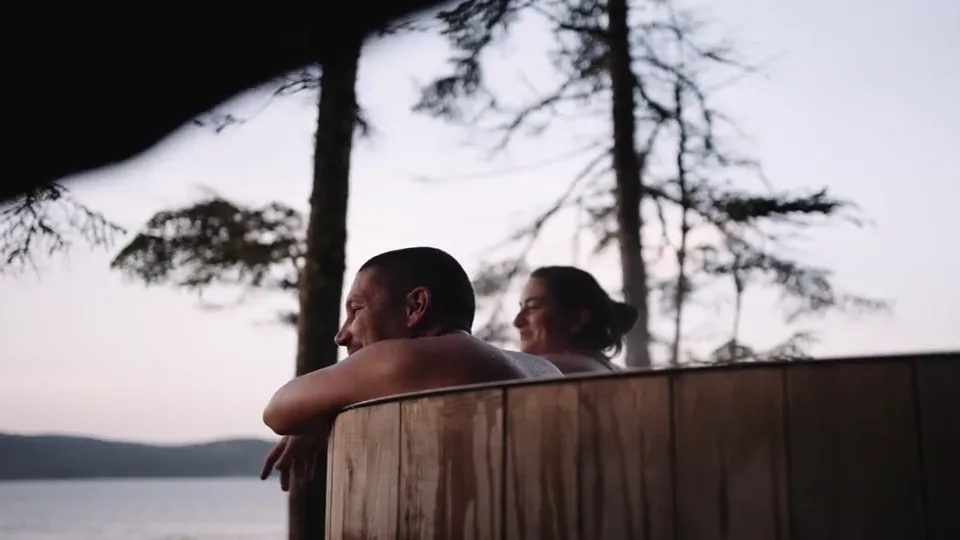
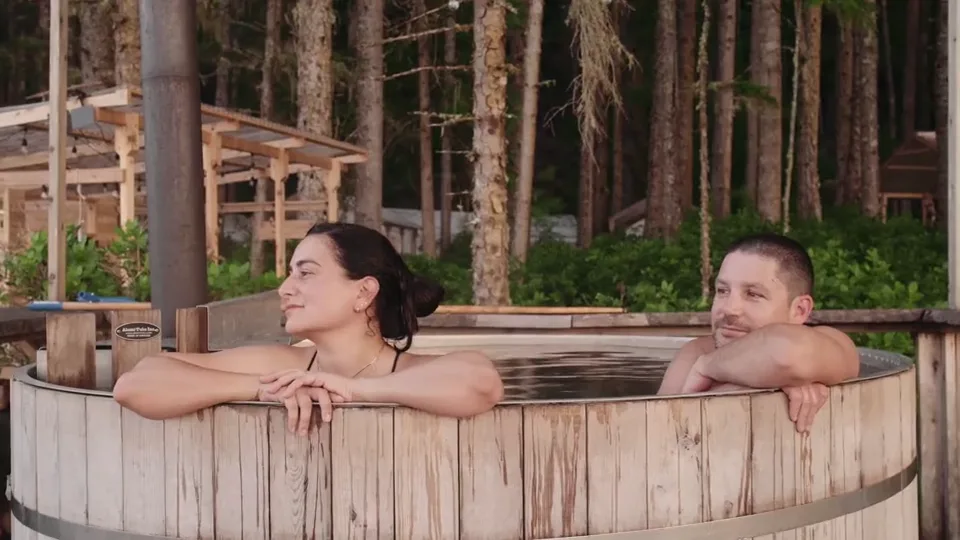
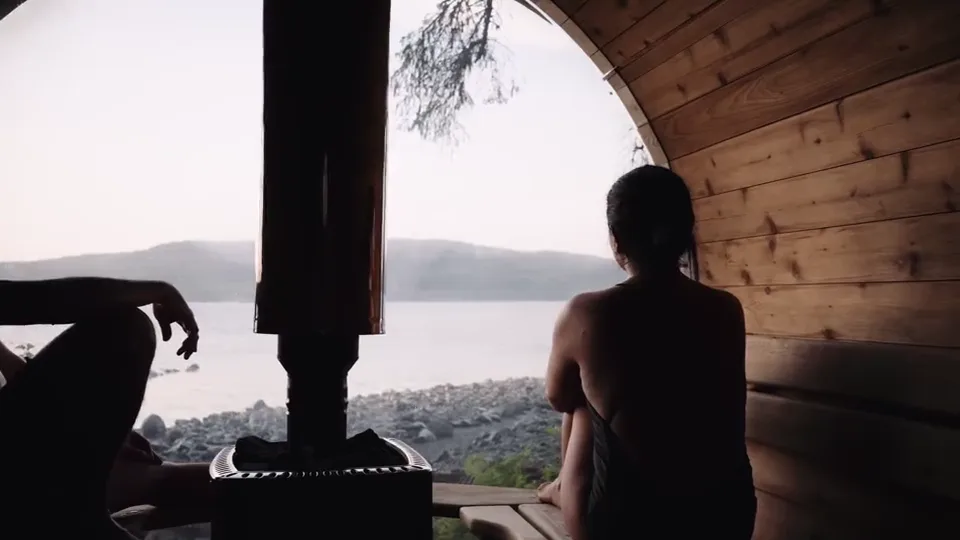
The tub and the sauna are both wood-fired, which means somebody has been thinking about your evening since the middle of the afternoon. That somebody is usually Bender, and by the second night you start noticing when the smoke goes up.
The sauna has a porthole cut into the wall facing the water. I shot through it about eleven times over four nights and never quite got tired of it. On the one morning the fog lifted early, it was the best window on the beach.
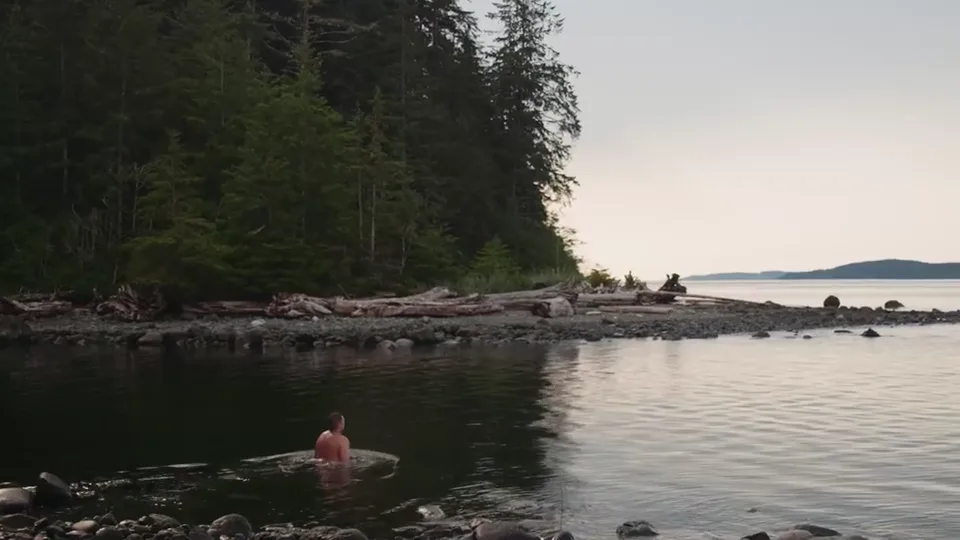
If wildlife is the reason you are going, take more days than I had, and accept that the rest is luck.
Field note
The people who make it work
Bender is the camp host, and he has been here since the camp began. He keeps the operation running and, more to the point, keeps the sauna and the hot tub hot, which by the second evening feels like the most important job on the beach.
The rest of the crew turns over with the seasons and the trips, so the names will be different when you go. What does not change is the kind of person it attracts. Nobody ends up on that beach by accident.

No walls
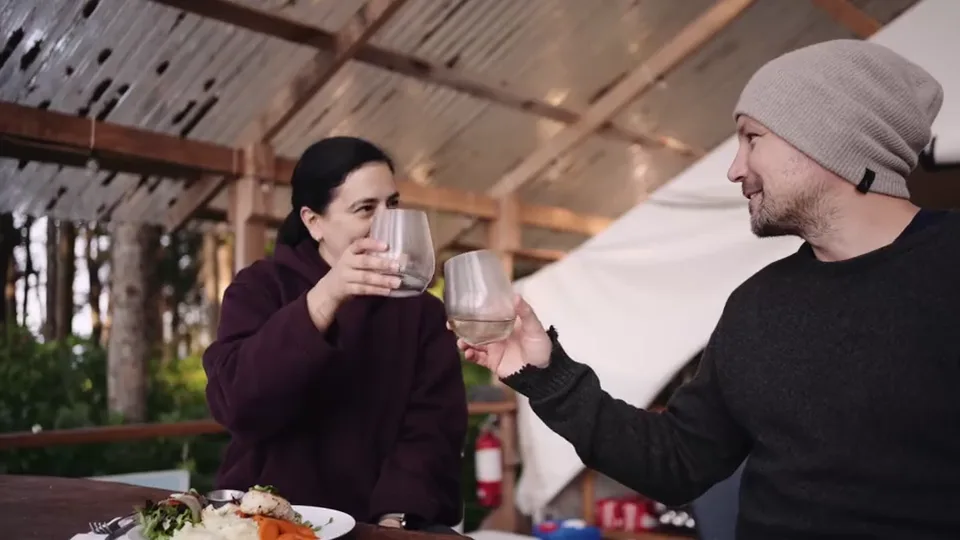
The kitchen is a roof on posts. Nothing arrives after you do: every ingredient came up on the same boat you did, or on the barge before it, and there is no second chance at any of it.
Out of that comes a plated three-course dinner, every night, for eighteen people, two and a half hours by boat from the nearest road.
How the pictures got made
A confession that belongs in the open. The couple you see in a lot of these frames are my friends Adam and Ava. I brought them because a shoot like this needs people who are good on camera, and because a camp photographed empty tells you nothing about what it is like to be in one. They also tidied their own glamping tent before I was allowed near it, which is more than I would have done.
The virtual tour was the awkward one. You cannot ask a working camp to hold still, so I shot most of it while the guests were out on day trips, and the rest by waiting for people to move out of frame. Some of the tour positions are drone positions rather than ground ones, and in a few of those I left the people in, because it worked better with them than without.

Nobody arrives knowing how to do this. That is the design and not a concession: eighteen guests at most, and a guide always within talking distance.
The paddling, and the waiting
Days work out from camp rather than moving it. This is a basecamp trip and not an expedition, so nothing is packed and unpacked. Morning, afternoon and sunset paddles are offered and you take the ones you want.


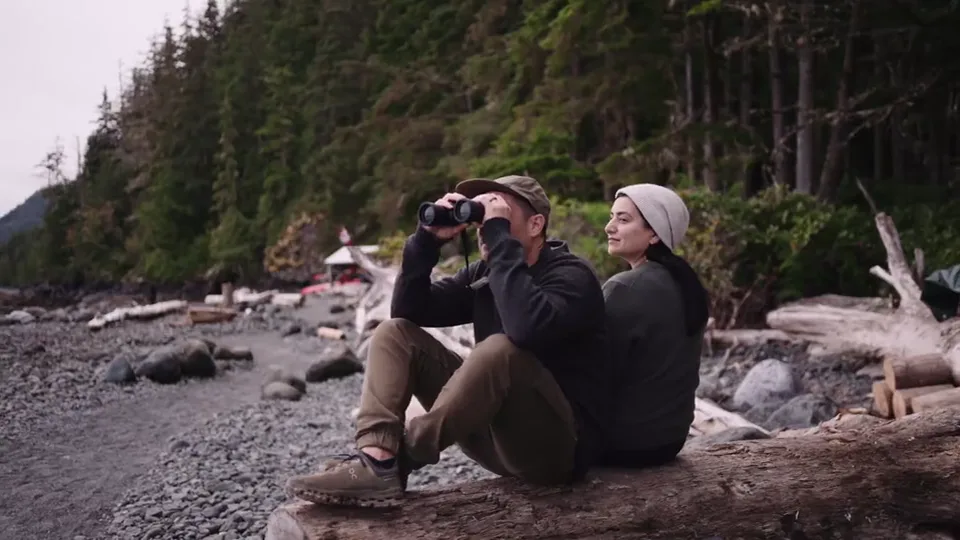


The strait goes flat and pink at the end of the day, and everybody stops talking. Nobody organises that. It just happens, at about the same time, every evening.
Who it suits, and what to pack
Anyone who likes being outdoors and would rather not earn it twice. No paddling experience, no camping skill and no gear are required, and the tent will be dry when you get back to it.
The honest caveat is the weather. It can be cold out there and it can be foggy, in August as much as any other month, and the mornings start misty far more often than the brochure photographs suggest. Bring layers. Bring a beanie. I was glad of mine on all four nights.
I would go back, and next time I would give it a week. Three days on that water is a fair holiday and not nearly enough of one.

Camp, and the strait beyond it
Wildcoast has run this coast since 1997, and the camp goes in for a short season, with departures every three days from the first of July to the fourteenth of September, the last group out on the seventeenth. There are two other trips in the catalogue: a five-day Whales, Wildlife and Wilderness route through the Discovery Islands and Desolation Sound capped at ten guests, and a seven-day Whales and Bears itinerary that adds grizzly viewing in the Orford River valley. Orca Camp is the one the company is built around, and it is the one I would send someone on first.
The full Wildcoast Adventures listing has the season dates, the published prices, the virtual tour of the camp and the film, and a way to ask about the weeks that are still open.