
Every first-timer asks the same two questions, usually in the same breath: is it safe, and should we be doing it at all. They are good questions and the honest answers are yes and yes, with conditions, and the conditions are the interesting part. I have spent two seasons at Glendale Cove with a camera, one in a boat in spring and one on the stands in the salmon run, watching not just the bears but the people whose job is to stand between the bears and me. This is what they actually do.
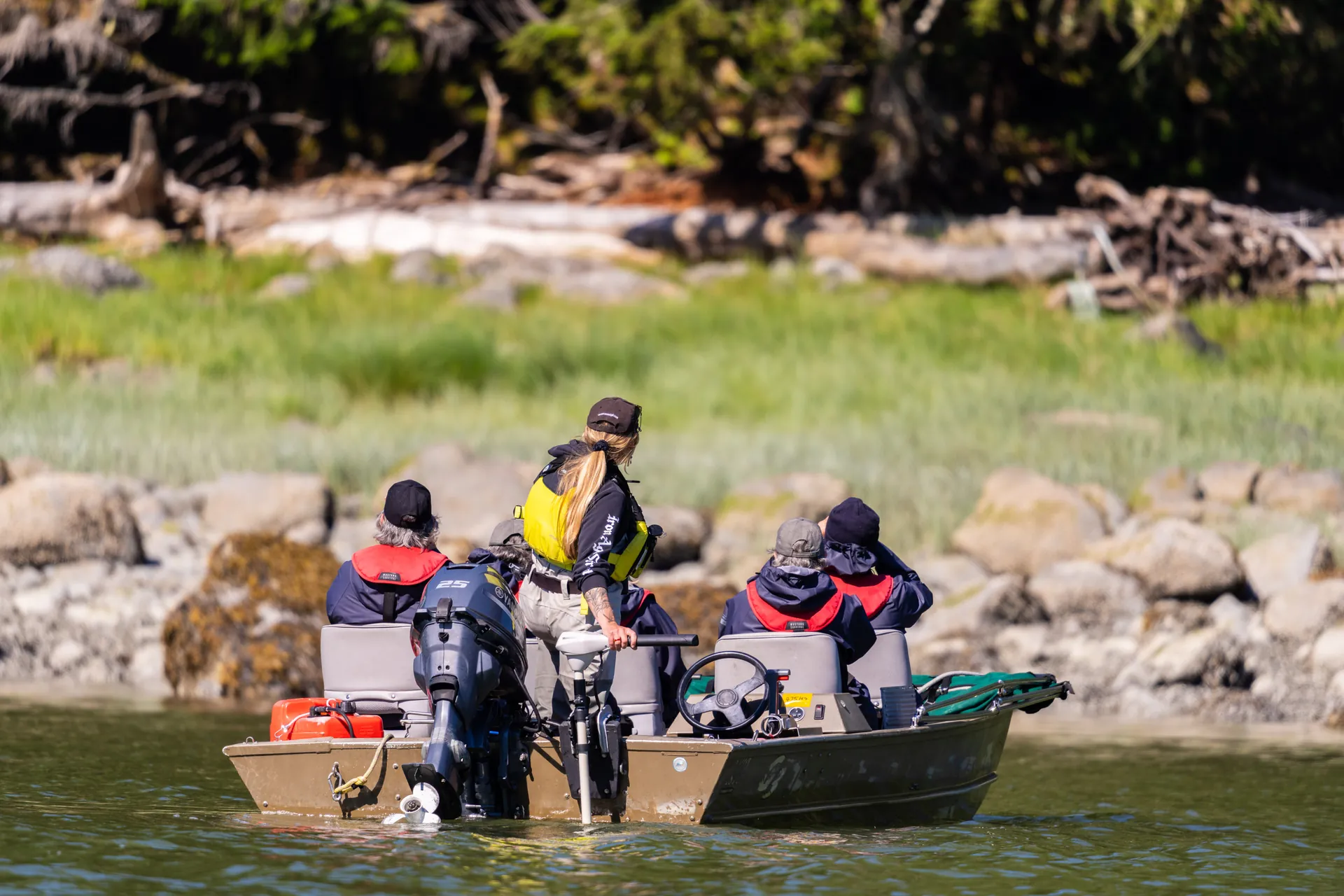
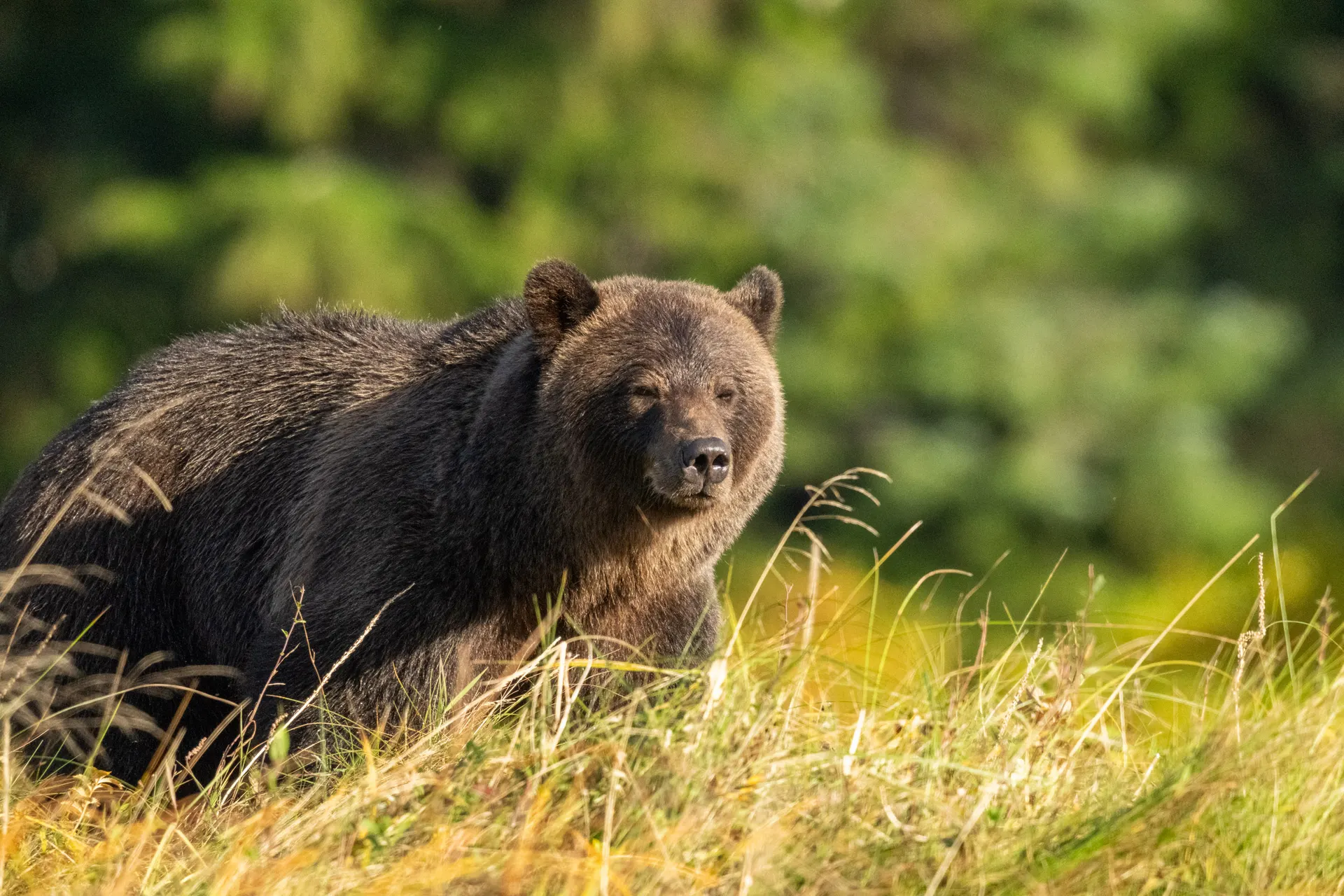
The whole of bear-viewing safety is in this frame: the people are in the boat, the bear is on the land, and there is water between them. Everything else is detail.
The distance rules
The first rule is that the bear sets the distance. On the boat outings, which is how viewing works from late May to the end of August at Knight Inlet Lodge and all season at Berry Island, the guide idles a small open boat along the estuary edge and holds whatever gap the bear is comfortable with. In practice that is ten to thirty metres, sometimes more. If the bear lifts its head and holds it, the boat backs off. If the bear keeps grazing, you stay. Nobody puts a foot on an estuary a bear is using, and nobody follows a bear along the shore. You are not there to approach a bear; you are there to be somewhere a bear might choose to come near.
The second rule is that the encounter has an end and the guide decides when. A bear that changes its behaviour, that turns to face the boat, that moves its cubs, that stops feeding, has told the guide something, and the guide responds by leaving. On the two seasons I have watched this, the leaving was quiet, unhurried and never negotiated with the guests. The guide is not asking whether you got the shot.
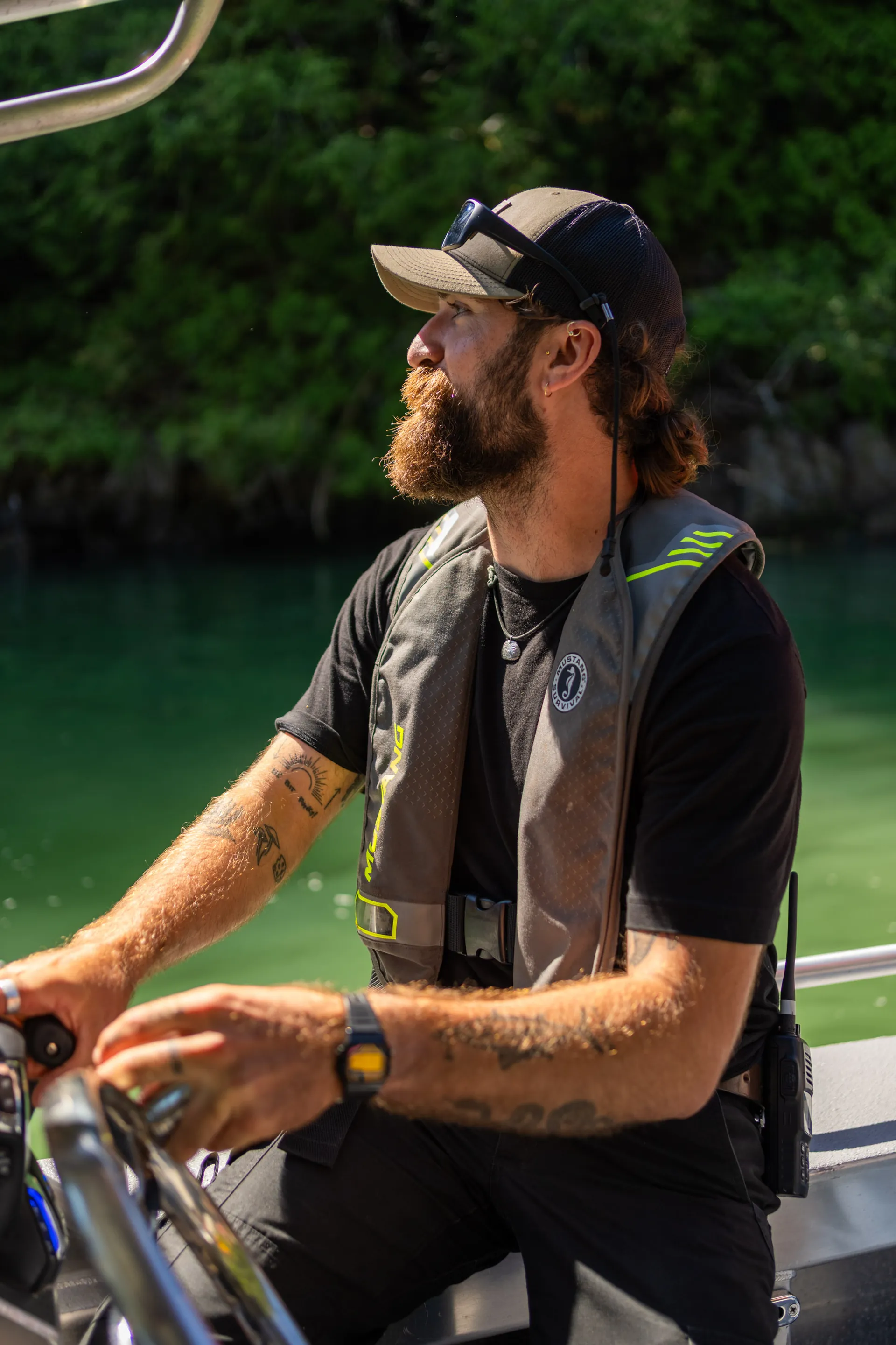
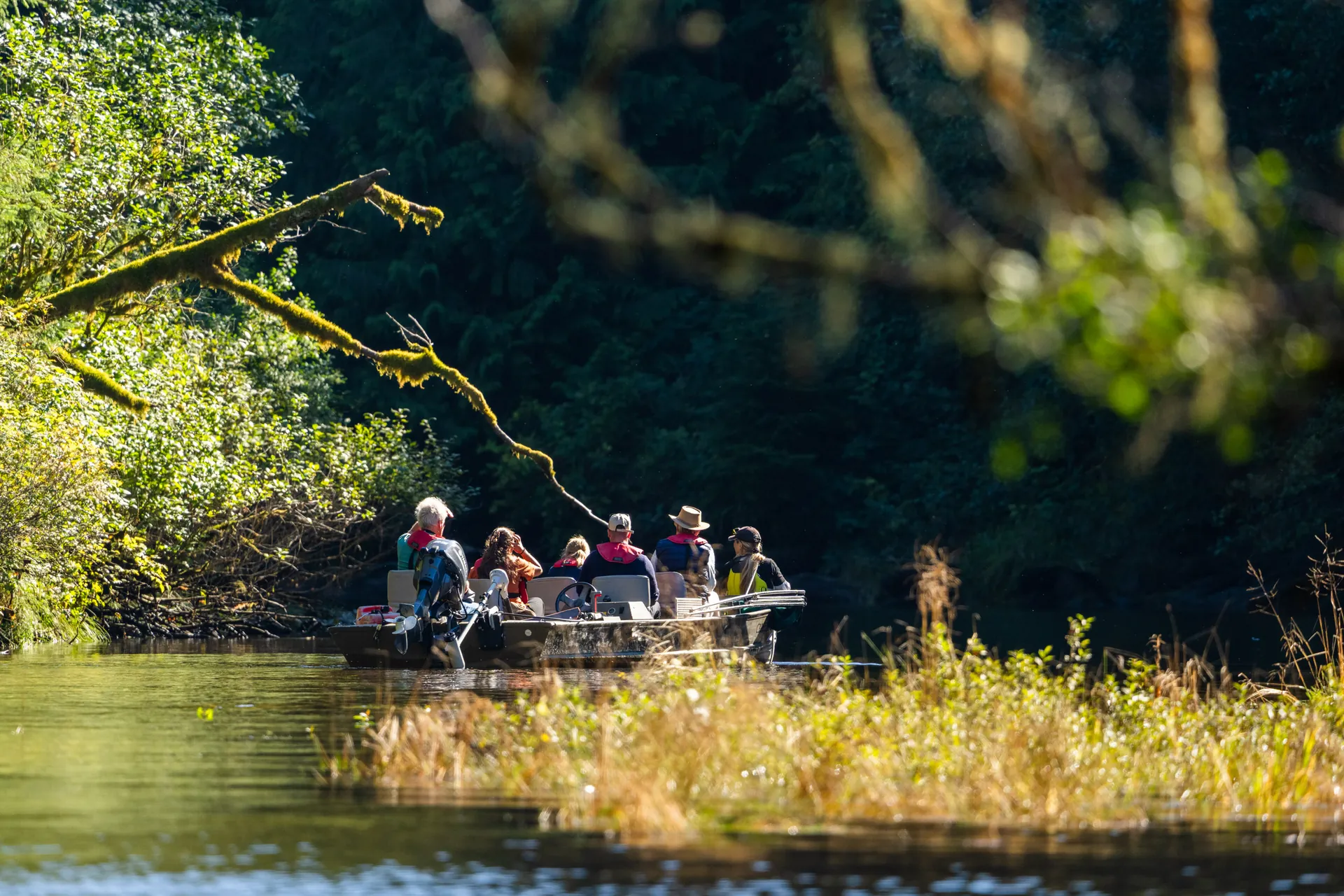
The guide is watching the bear, not you
At the helm, the guide's eyes are on the shore the whole time. The engine is at idle so that the boat can be moved in a second and so that the bear hears the same low sound it heard yesterday and the day before.
Under the cedars on the river, everyone looking the same way. The guide has already worked out where the boat can go and where it cannot; the guests are simply carried there and asked to keep their voices down.
Why nobody lands on an estuary
An estuary in May is a bear’s larder. The sedge is the first real food after the den, the sows have cubs a few weeks old, and a bear pushed off its grazing by people on the flats has nowhere better to go. So the boats stay on the water, and the land excursions, the Kwalate valley hike, the tracking tour, the forest walks, happen elsewhere and in a group with a guide who carries spray and reads the sign. The lodge is plain about one thing that follows from the same logic: no sport fishing anywhere in its area. A dead salmon on a line is a bear’s food in the wrong hands.
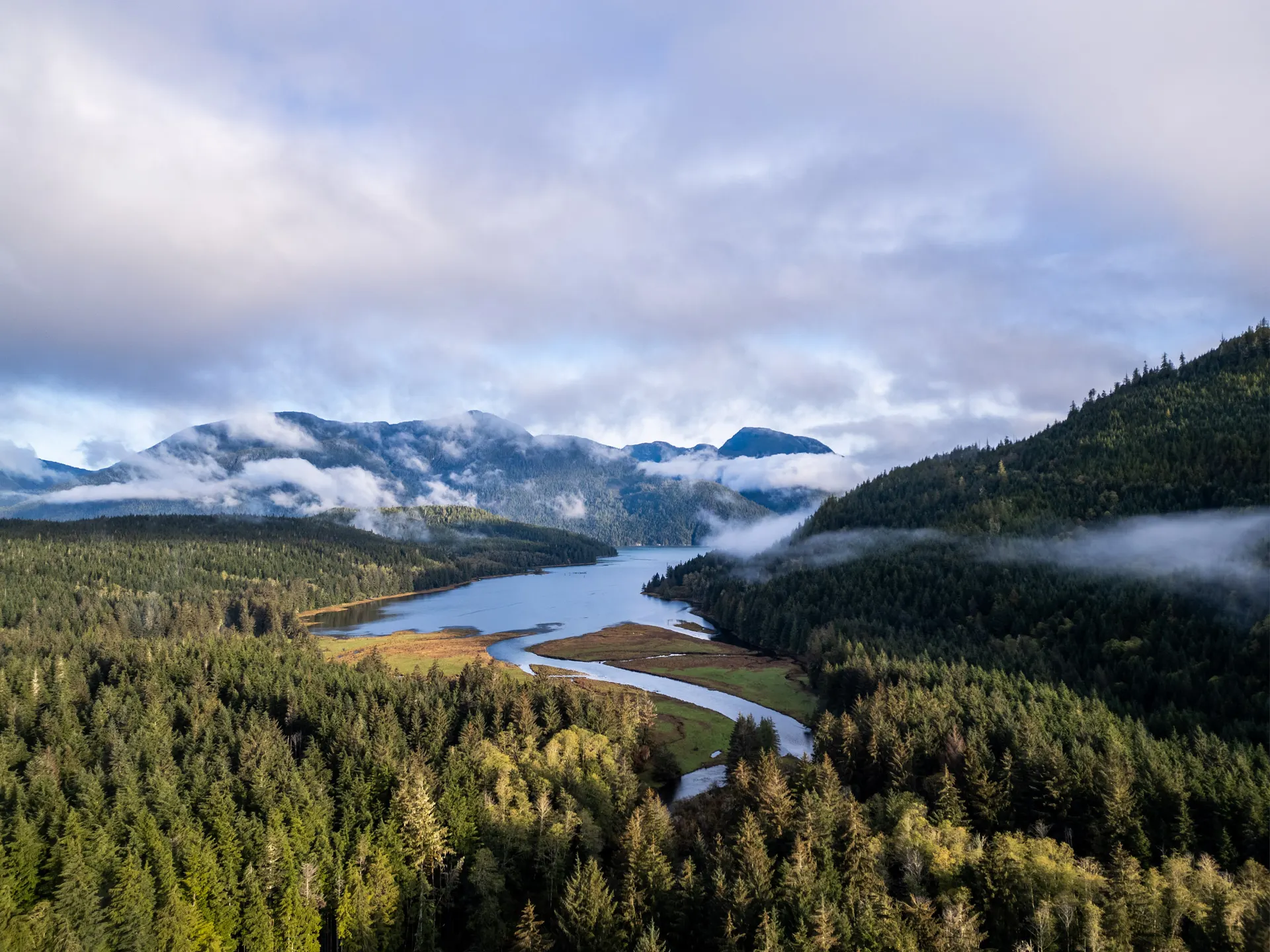
The stands are the safest place on the coast
It sounds backwards, because the stands are where the bears are closest. From 31 August the Glendale River fills with pink salmon and the lodge moves its guests onto timber platforms built above the spawning channels, one trip a day, six to twelve people at a time. The bears fish directly below. Some pass within a few metres. And it is the safest bear viewing I know, for a simple reason: you are above the river, behind a rail, in a structure the bears have walked past for years, and nothing about you is in their space. A bear on the river below a stand is doing exactly what it would do if the stand were a tree. The boat, by contrast, is on the bear’s water, which is why the boat has a distance rule and the stand does not need one.
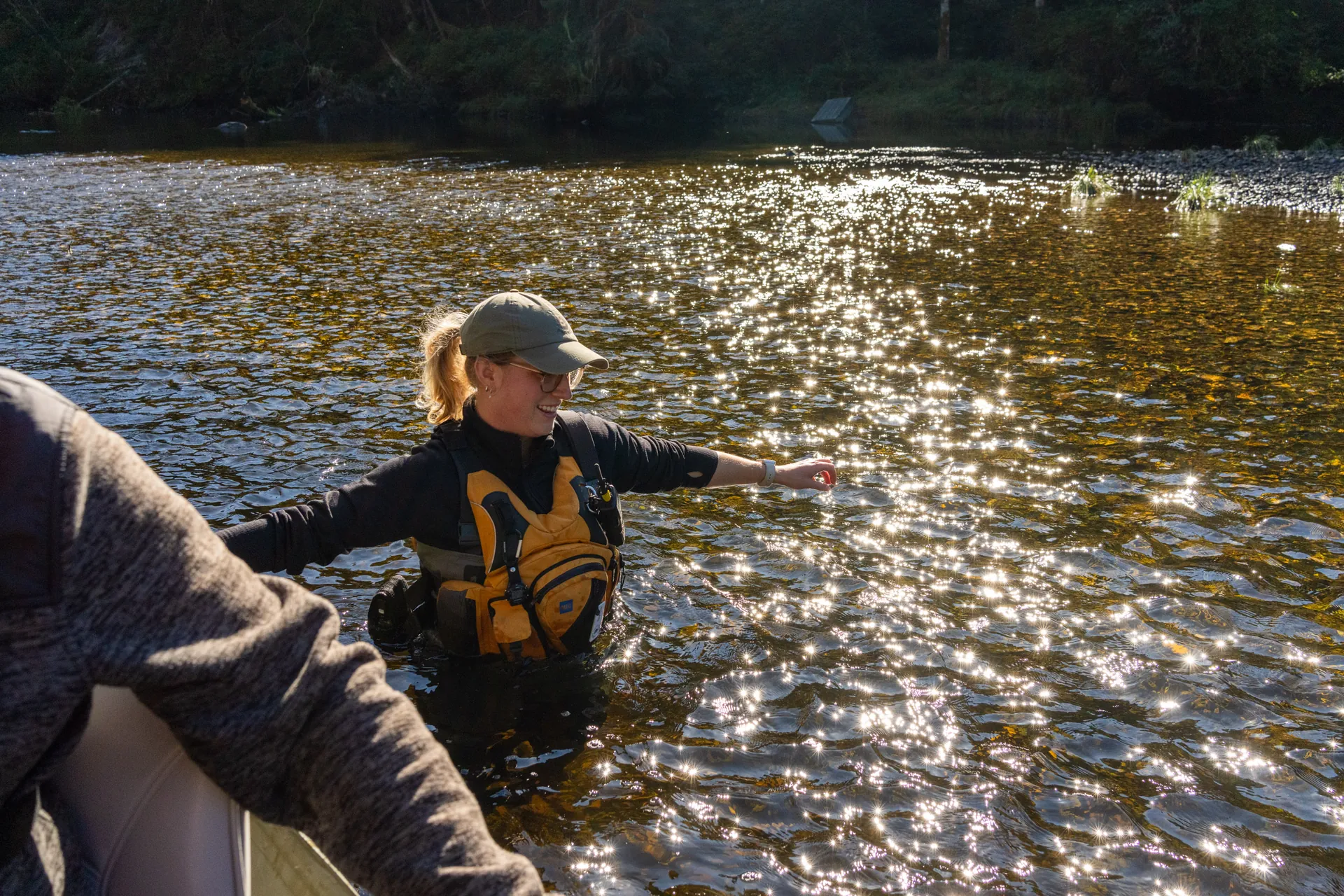
Minimum ages, and why they exist
Knight Inlet Lodge takes children from 6 in the spring and summer boat seasons and from 8 in the fall platform season. Berry Island Lodge takes them from 7 with a parent. The numbers are not about the bears being dangerous to children in particular; they are about whether a person can sit still and quiet for two hours in a boat or on a stand, because a fidgeting, chattering shape is the one thing that makes a bear look up. The limits come from the boats and the stands, not from a marketing department, and every operator I know holds them.
Who certifies the guides
The lodges on this coast belong to the Commercial Bear Viewing Association of British Columbia, and I will cite only what its public site says. The association exists, in its own words, to promote sustainable bear viewing in the province and aid in the protection of wild bears and their ecosystems. It has produced a set of best practices for how the industry should behave in the presence of wild bears, it runs a guide certification system, and member companies commit to hiring only guides who hold that certification. Its guide code of conduct has each guide swear to carry bear spray at all times while guiding, to abide by the province’s Wildlife Act, to report poaching and pollution, to comply with the association’s best practices, and to inform guests of their own responsibilities. The code also acknowledges constitutionally protected Aboriginal and treaty rights and Indigenous harvesting practices, which matters here more than most places, as the next section explains. What the public pages do not do is publish a distance in metres, so neither will I; the ten to thirty metres above is what I have measured with a lens, not a rule I have read.
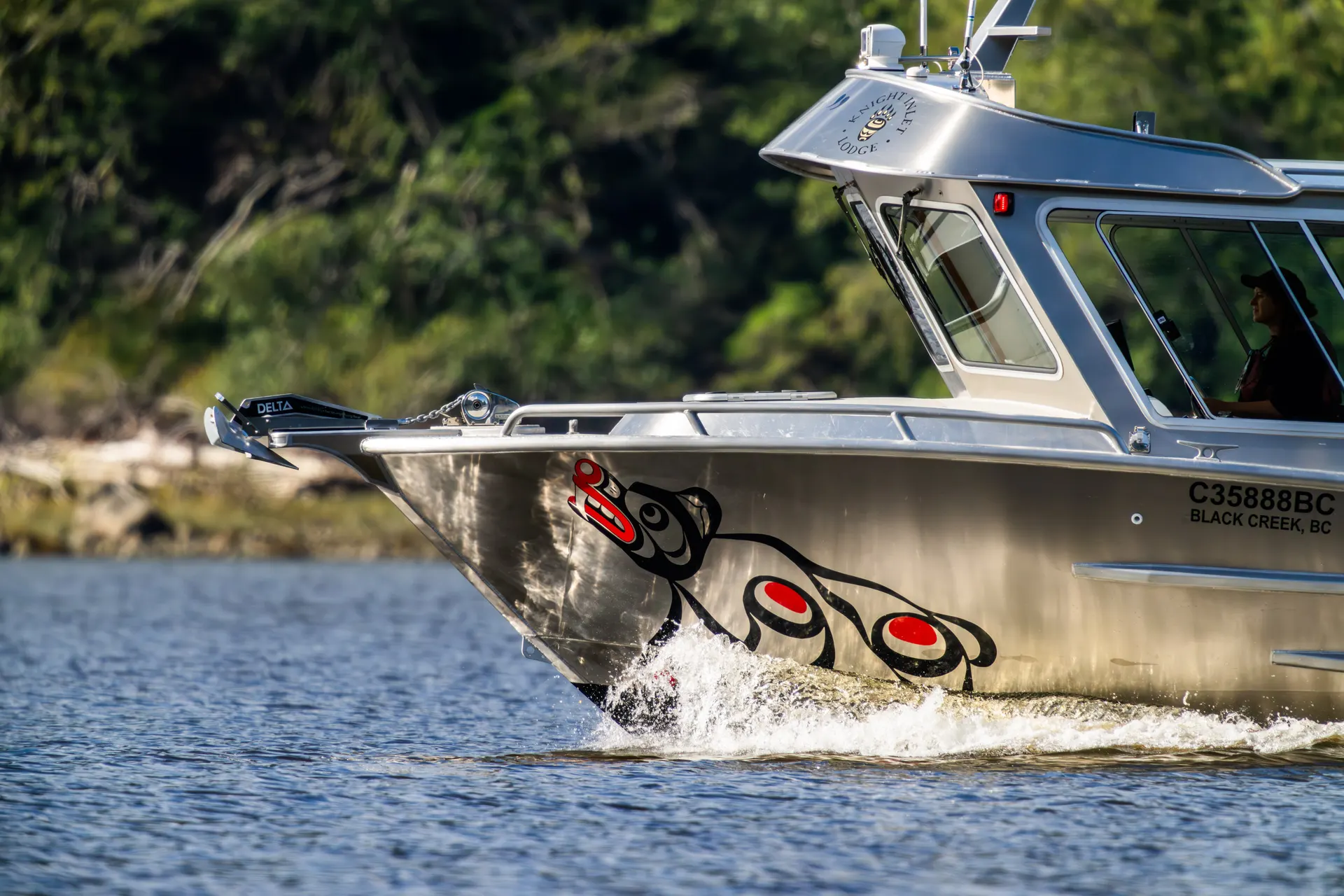
Whose rivers these are
The formline bear on the bow is not decoration. Knight Inlet Lodge is owned by five First Nations, and the bears you are shown are being shown on the terms of the people whose territory the river runs through. That is the ethical footing of the whole thing.
On the Orford River in Bute Inlet, the viewing platforms belong to the Homalco Nation, and Wildcoast Adventures buys a day on them for its Whales and Bears trip. I have not stood on the Orford stands; I am telling you who runs them.
Habituation is not food conditioning
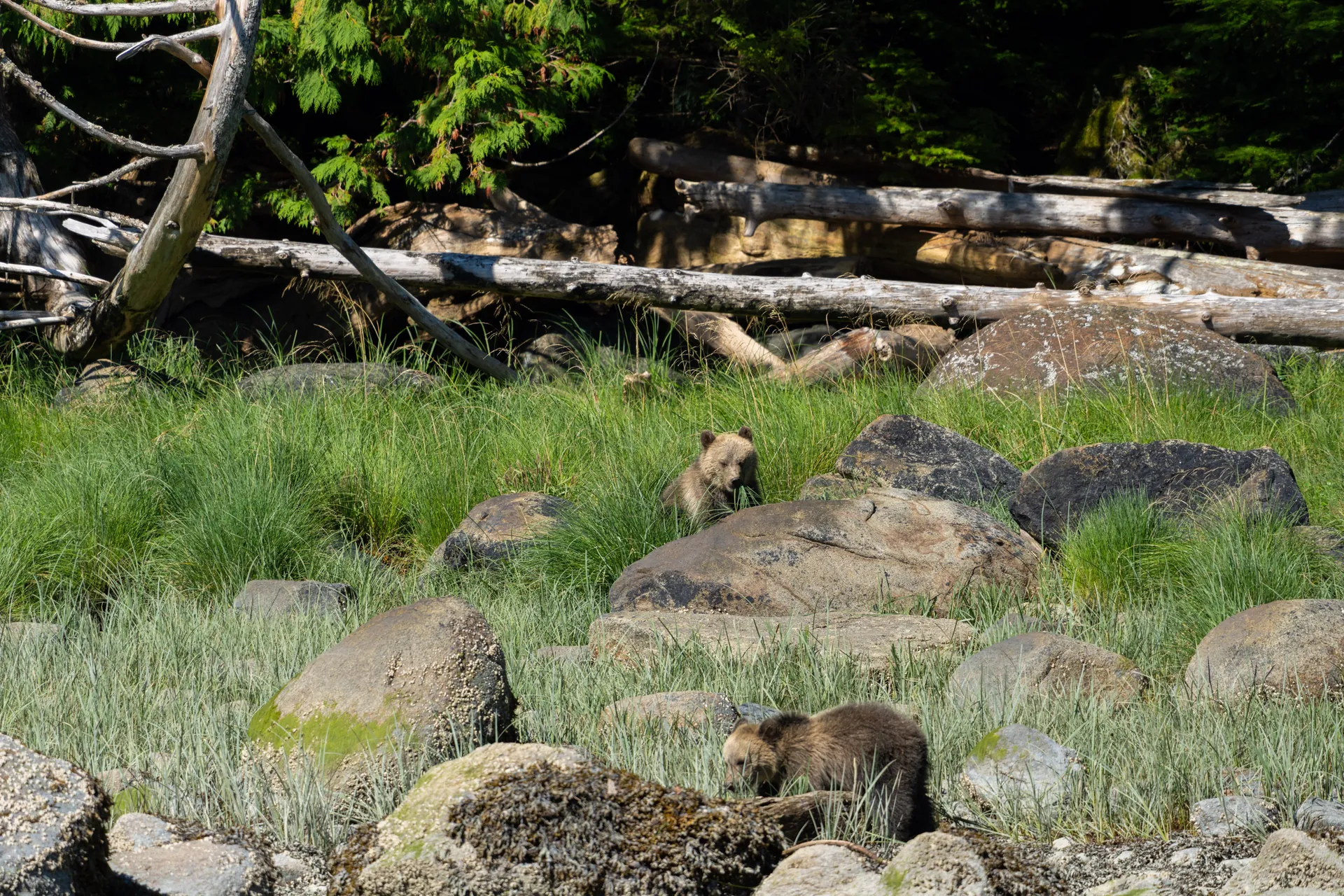
This is the distinction that settles the ethics question, and it is worth being precise about. The bears at Glendale Cove are habituated: they have learned, over years, that a low boat at idle and a timber platform in the trees are part of the estuary and mean nothing, neither threat nor food. A habituated bear ignores you, which is why the pictures are possible and why the encounters are calm. A food-conditioned bear is a different animal altogether: it has learned that people mean a meal, it approaches, and it ends up shot. Nobody feeds a bear here. The lodge asks for scent-free toiletries, or to use theirs, because a grizzly’s nose is the reason. The boats keep the same low sound and the same water, day after day, so that what the bears learn is that people are boring. The whole industry depends on the bears staying bored, and every rule above is in service of it.
A bear that ignores you is the product. A bear that comes to you is the end of the product, and probably of the bear.
Field note
My own rule: the long lens is the ethics
I photograph for a living and I hold myself to one rule on this coast that does not appear in any code: if I want the bear bigger in the frame, I change the lens, not the distance. From the boat that is a 400 mm and a full sensor, and 600 is not too much; from the stands the 70 to 200 does the work and a second body saves changing lenses with a bear at ten metres. Every frame on this page was made from a boat or a stand, at the distance the guide chose, and the ones where the bear fills the frame are the long lens doing what it is for. The camera is the guest most likely to push a guide, and the guide’s job includes saying no to it. Mine is to make sure they never have to.
So: safe, on the terms above, and I have never felt otherwise in a boat or on a stand. Ethical, on the terms above, which are the operators’ and the nations’ terms rather than mine. What you owe in return is small and specific: sit still, keep your voice down, leave the scented shampoo at home, and let the guide end the encounter without a sigh. How grizzly viewing works covers the seasons and the bill; when to go picks the week; and the camera kit I carry on a boat is where the long lens gets its own page.