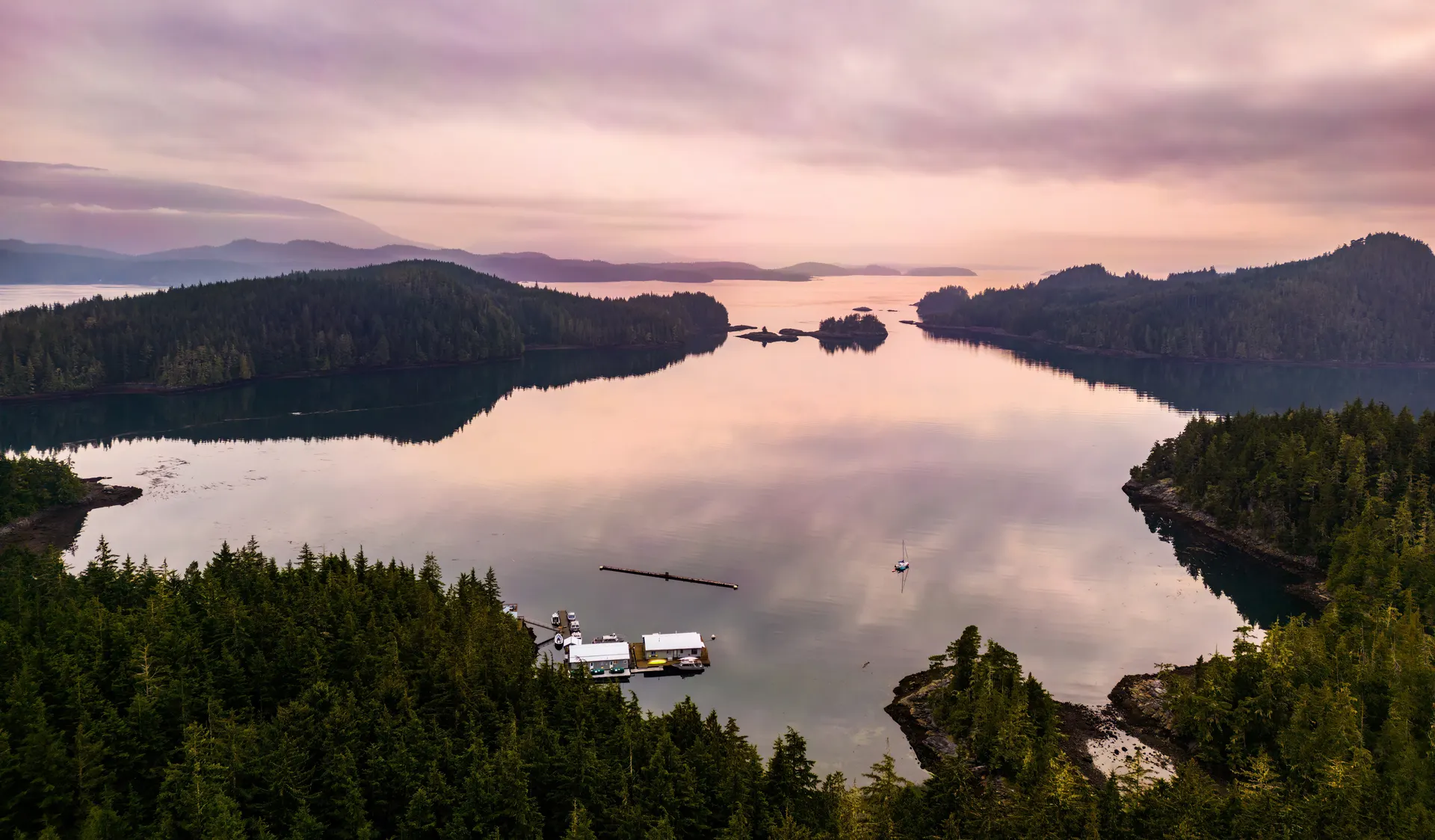
A grizzly does not care that you have flown in for it. That is the first useful thing to know. Bear viewing in British Columbia is not a safari where the animals are found for you; it is a matter of being in the right estuary in the right week, with a guide who knows which bear is which, and then waiting. I have done two seasons of it at Glendale Cove with a camera in my lap, once for the salmon run and once for the spring light, and this is how the thing actually works, from the boat to the bill.
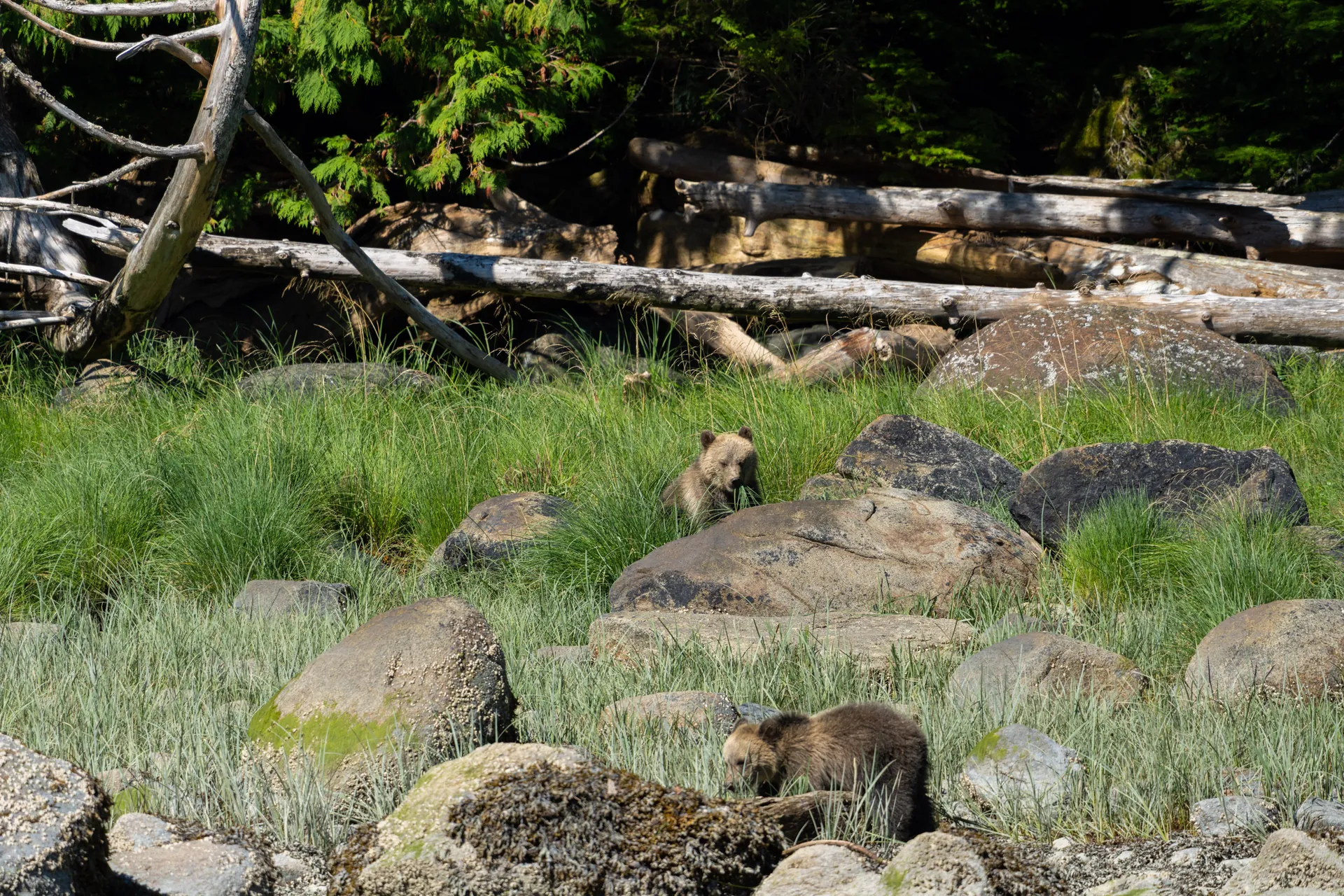
The bears are on a schedule that has nothing to do with yours: sedge on the estuary in May, berries on the slopes in July, salmon in the river from late August. You pick the week; the guide picks the tide.
Two ways you are shown a bear
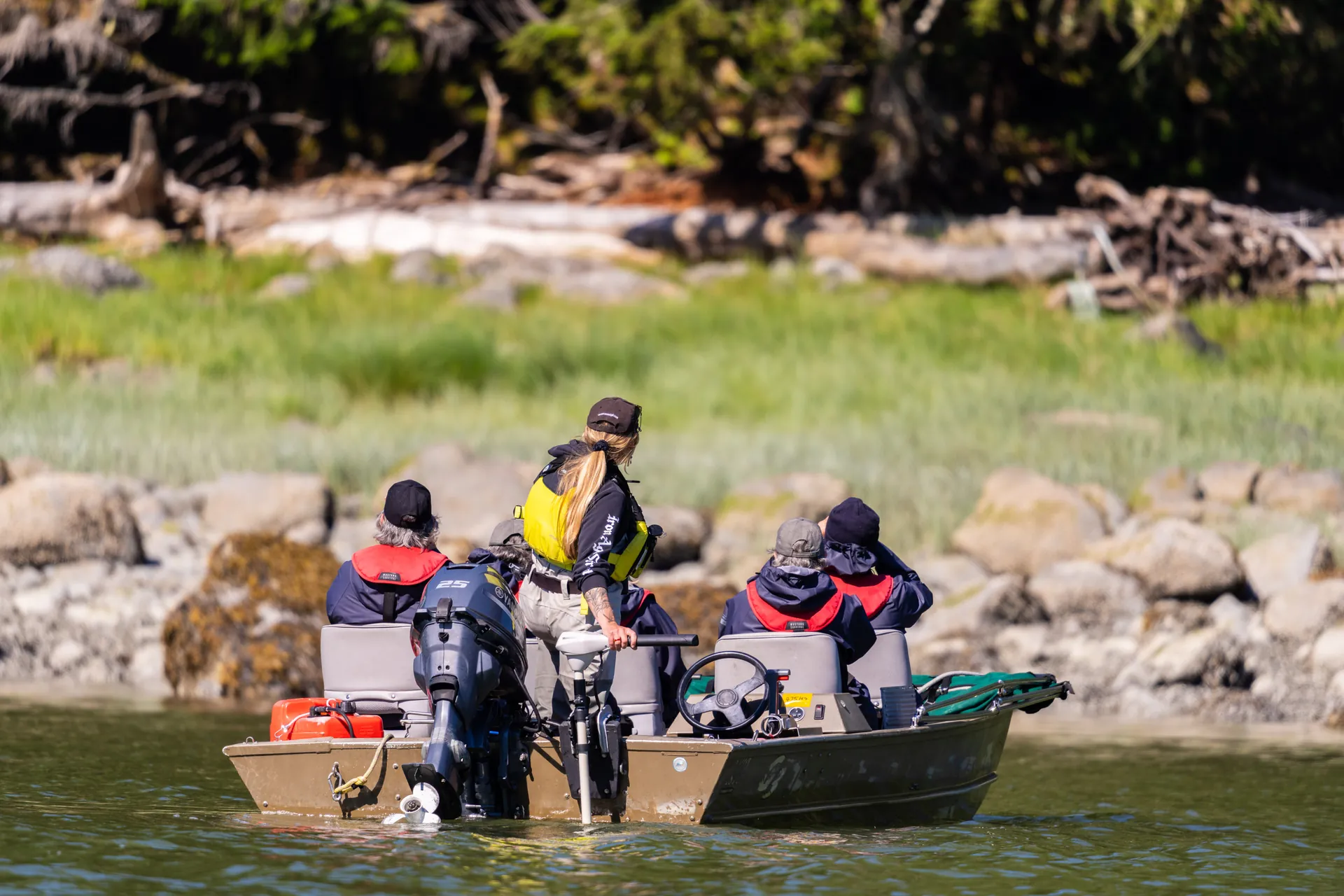
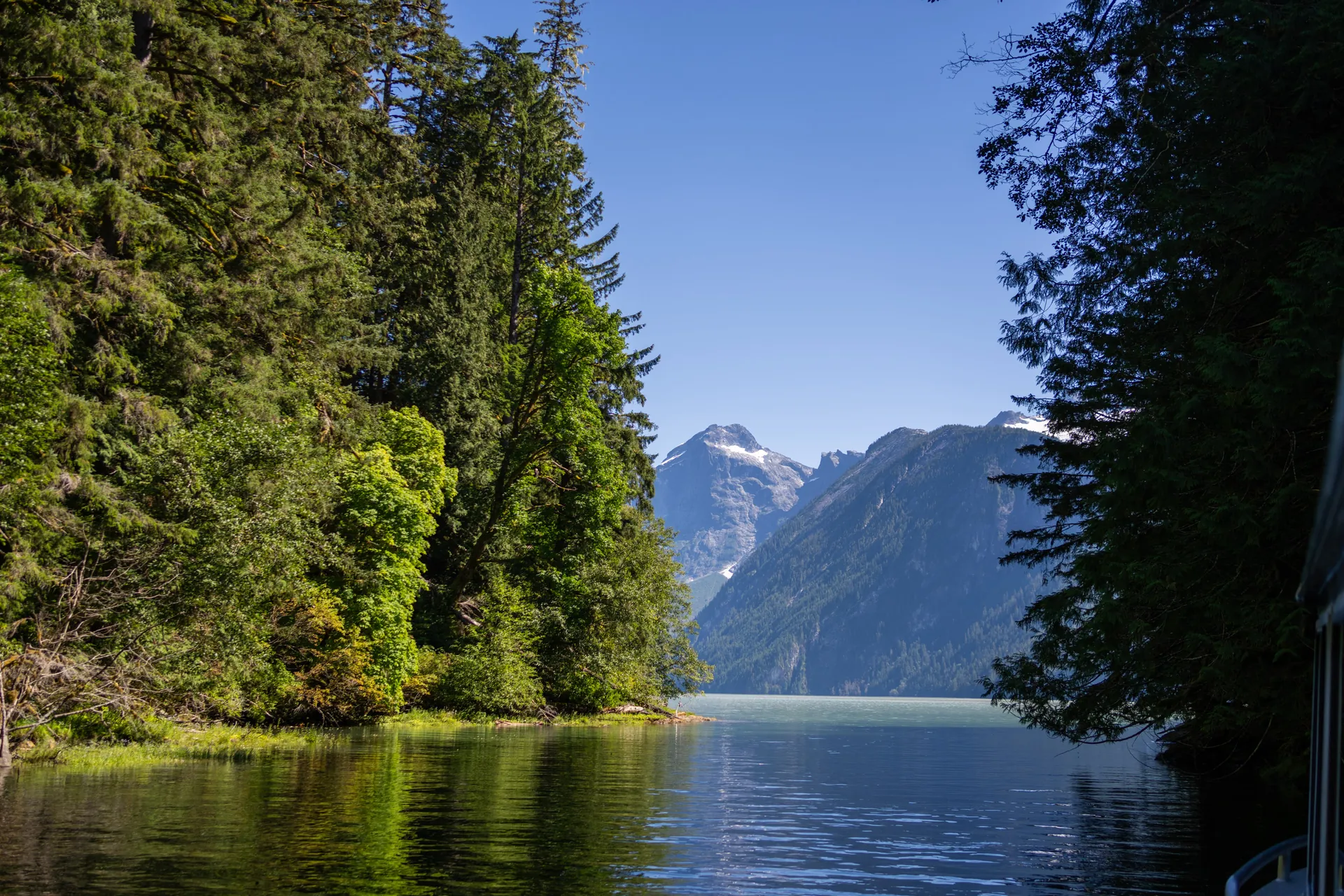
There are two kinds of bear viewing on this coast, and they happen in different months. From late May to the end of August it is done from a boat. The guide idles a small open boat along the estuary at high tide while the bears graze the sedge flats, or in midsummer works the shoreline where they turn rocks for crabs and browse the berry slopes. You are ten to thirty metres off, the engine is barely on, and the bear decides how long the encounter lasts.
From the boat
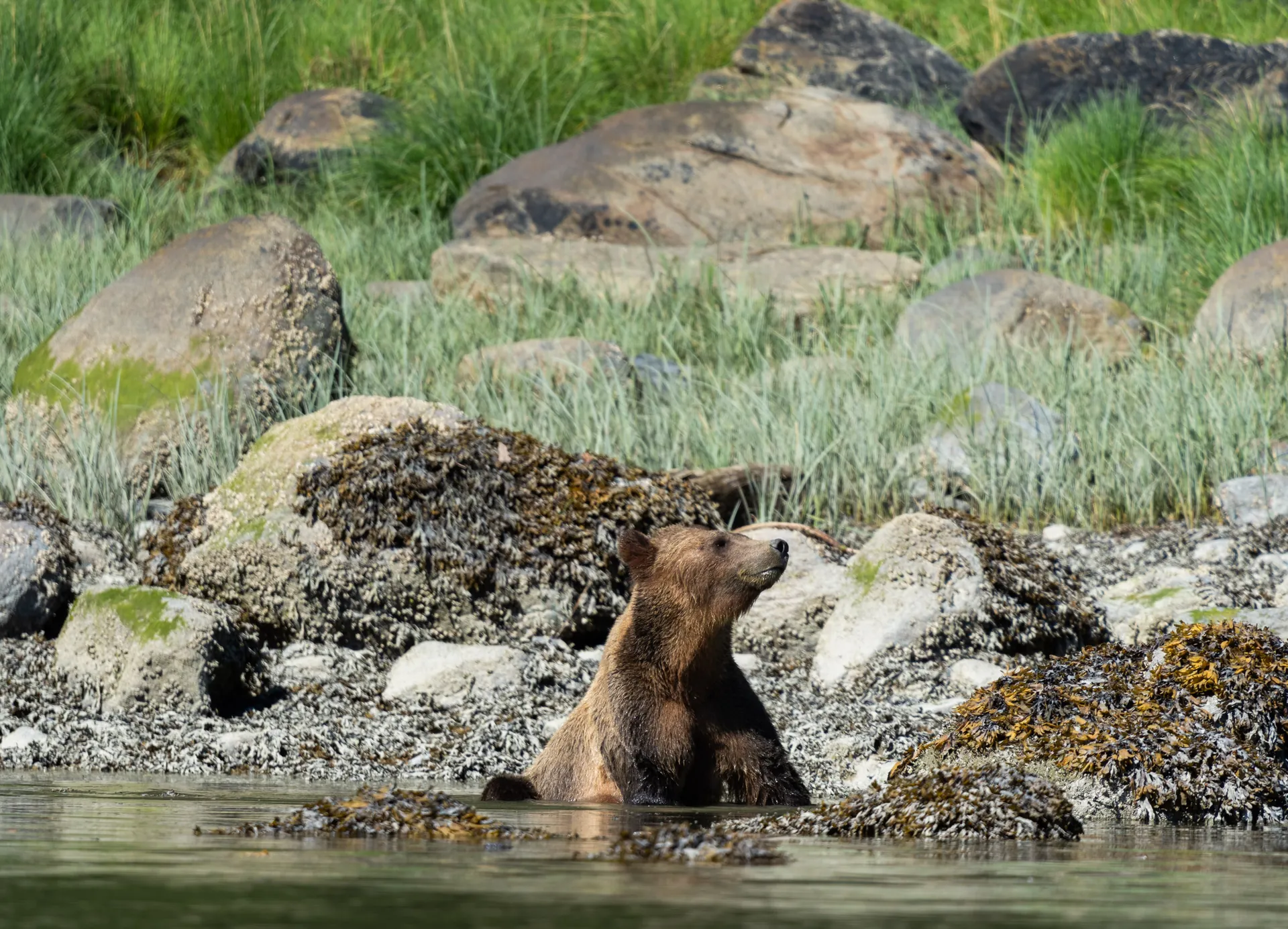
A few metres off the rocks, cameras up, engine at idle. The guide reads the bear; if it lifts its head and holds it, the boat backs off. The good encounters are the ones the bear forgets you are there for.
Midsummer bears are on the tide line turning boulders for crabs. It is not the salmon spectacle, and I went back for the spring light rather than the numbers, but a single bear on a still morning with no other boat in the cove is its own thing.
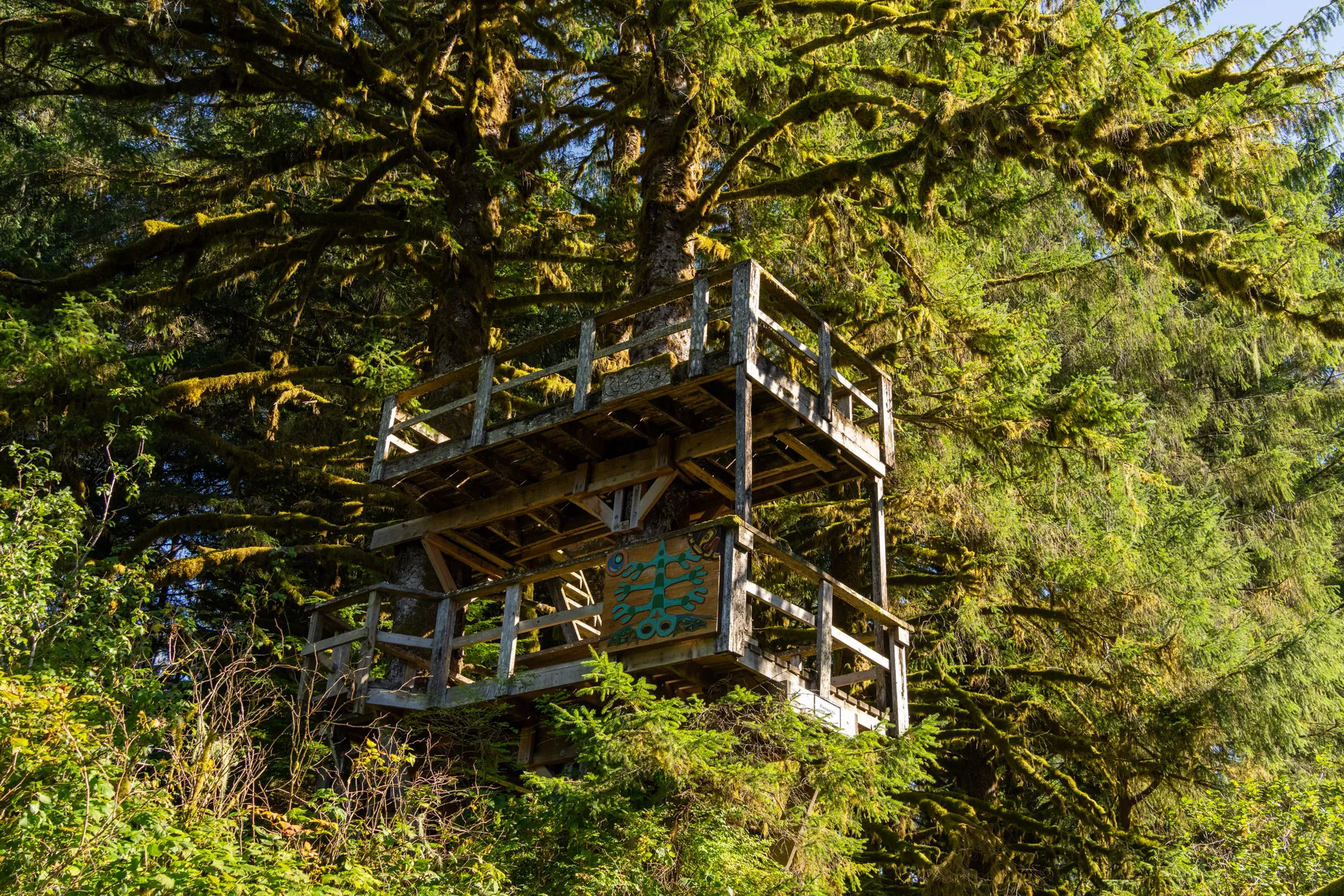
From the last week of August the salmon arrive and everything changes. Knight Inlet Lodge moves its guests off the boats and onto viewing stands built above the spawning channels of the Glendale River, and for six weeks the bears fish the river directly below you. This is the season the lodge is known for, and the reason September sells out a year ahead.
Where the bears are
The grizzlies of the BC coast follow the salmon rivers, and the lodges follow the grizzlies. On this record, two places run bear viewing as the main event and one adds it to a kayak trip:
Knight Inlet Lodge, Glendale Cove, a floating lodge 30 minutes by floatplane from Campbell River, owned by five First Nations. Boat viewing from 21 May, the stands from 31 August to 15 October, up to 36 guests. The benchmark, and the one I know best.
Berry Island Lodge, Broughton Archipelago, a lodge on a rocky point reached by water taxi from Alder Bay near Port McNeill, 1 June to 6 October. Full-day bear viewing in the inlets and estuaries from small boats, twelve rooms, and packages priced on enquiry rather than from a tariff.
Wildcoast Adventures, whose 7-day Whales and Bears itinerary swaps a zodiac day for a full day on the Homalco Nation’s viewing platforms on the Orford River from 25 August, out of the kayak camp in Johnstone Strait.
There are other established areas that I have not photographed yet, so they are not on the record, only on this list: Bute Inlet, where the Homalco run day trips from Campbell River; Great Bear Lodge out of Port Hardy; the Khutzeymateen sanctuary north of Prince Rupert; Tweedsmuir Park Lodge in the Bella Coola valley; and Spirit Bear Lodge at Klemtu, for the white Kermode bears. When I have stood on their boats they will get their own pages.
The rules a guide will not bend
Every operator on this coast works inside the same understanding: the bear sets the distance. In practice that means the boat stays off the shore, nobody lands on an estuary a bear is using, voices stay low, and the guide ends an encounter the moment a bear’s behaviour changes. The lodges belong to the Commercial Bear Viewing Association and its guides are trained and certified; ask, and they will tell you which bears are which and which ones they give more room.
The guide is the product
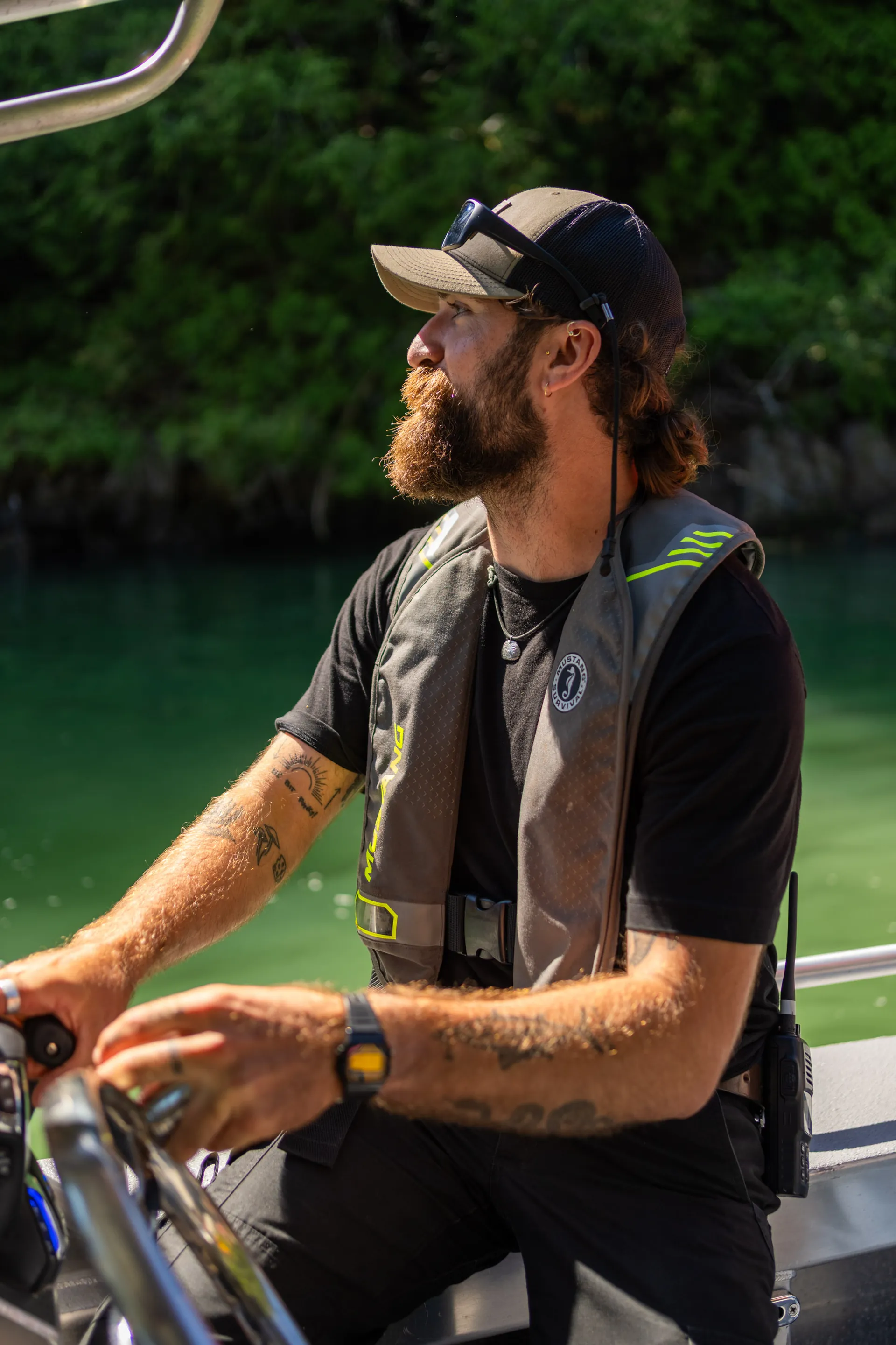
The person at the helm has watched these particular bears for years and knows the sow with the two cubs from the young male who has just been pushed off the best fishing rock. What you are paying for is that knowledge, and the boat is just how it is delivered.
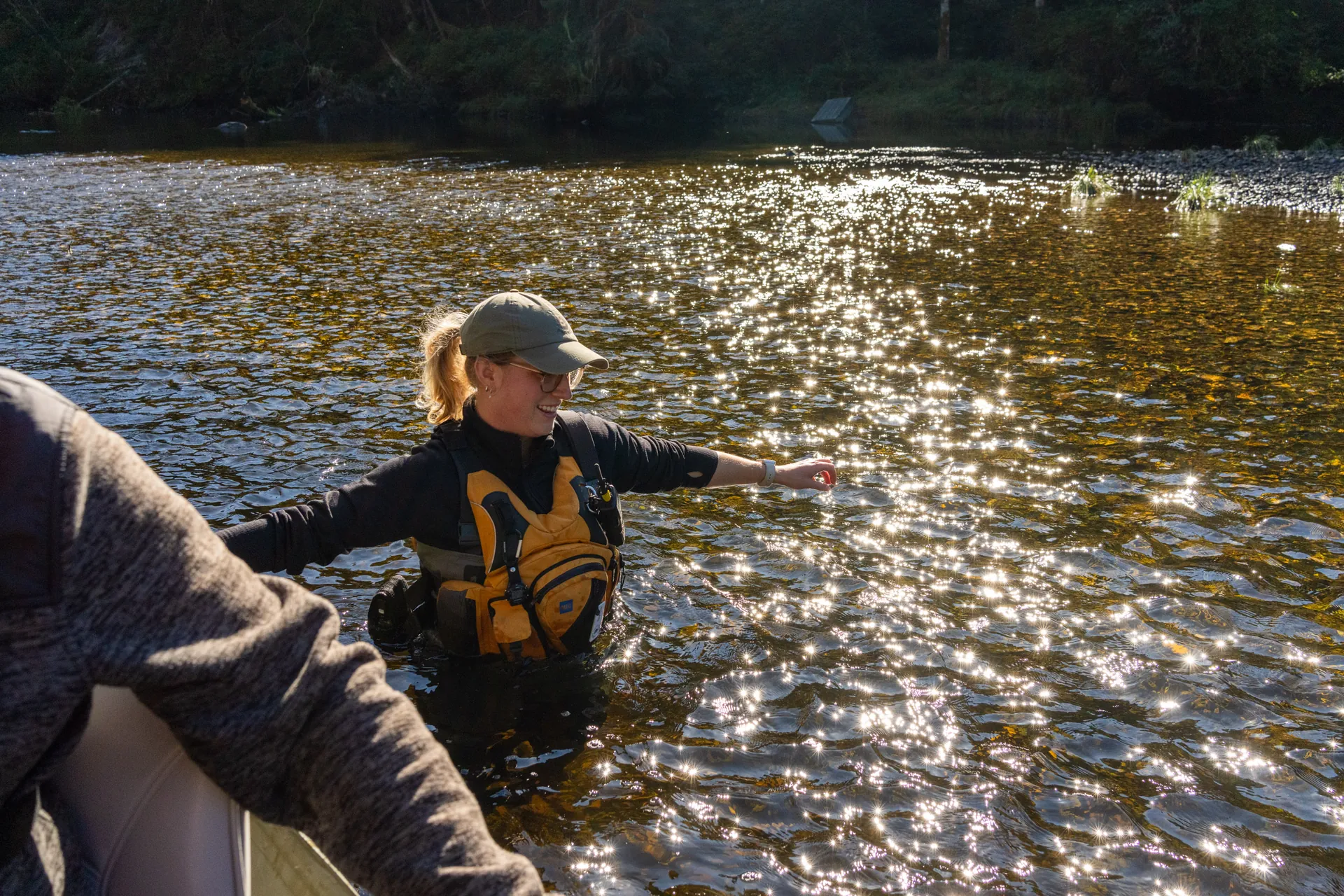
Low water means walking the boat. The guides do it without comment. On the stands they carry spray and you carry nothing; on the boat nobody needs it, because nobody is on the shore.
Minimum ages exist because the boats and the stands need people who can sit still: six at Knight Inlet for the boat seasons, eight for the fall platforms, seven at Berry Island with a parent. Nobody guarantees a sighting. What you are buying is probability, and at Glendale Cove in September that probability is close to certainty; in May it is a good morning rather than a sure one.
Getting there
None of these places have a road. Knight Inlet’s package includes the night before in Campbell River and a floatplane at nine the next morning: no carry-on at all, 14 kilograms in a soft bag, back on the dock by quarter past eleven on departure day. Berry Island is a water taxi at noon from Alder Bay, four hours up the island from Nanaimo or a Pacific Coastal flight into Port Hardy the day before. Wildcoast starts at the Campbell River dock. In every case the lodge’s own transfer is in the price and the night before is yours to arrange, unless it is Knight Inlet, where the Comfort Inn is in the package.
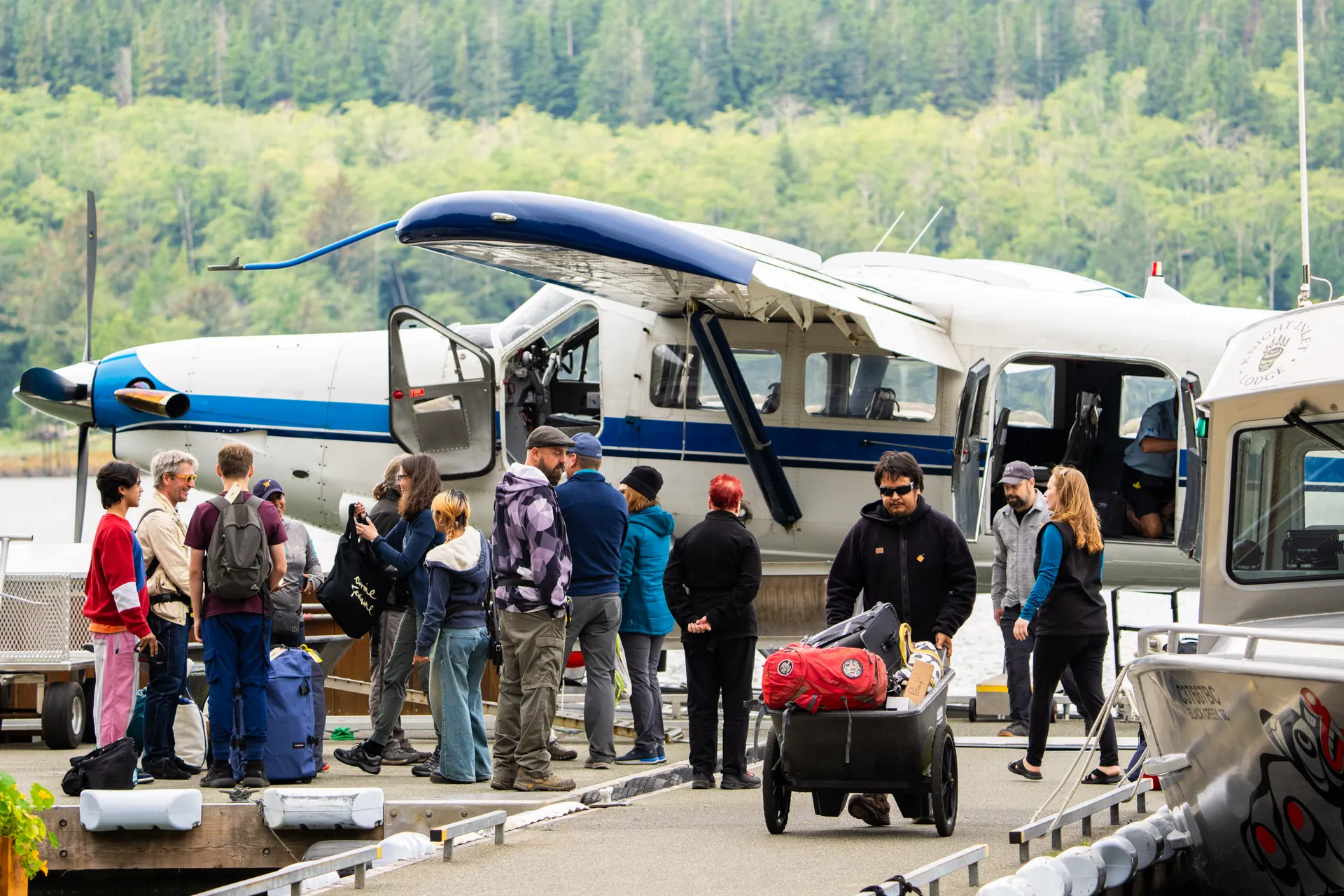
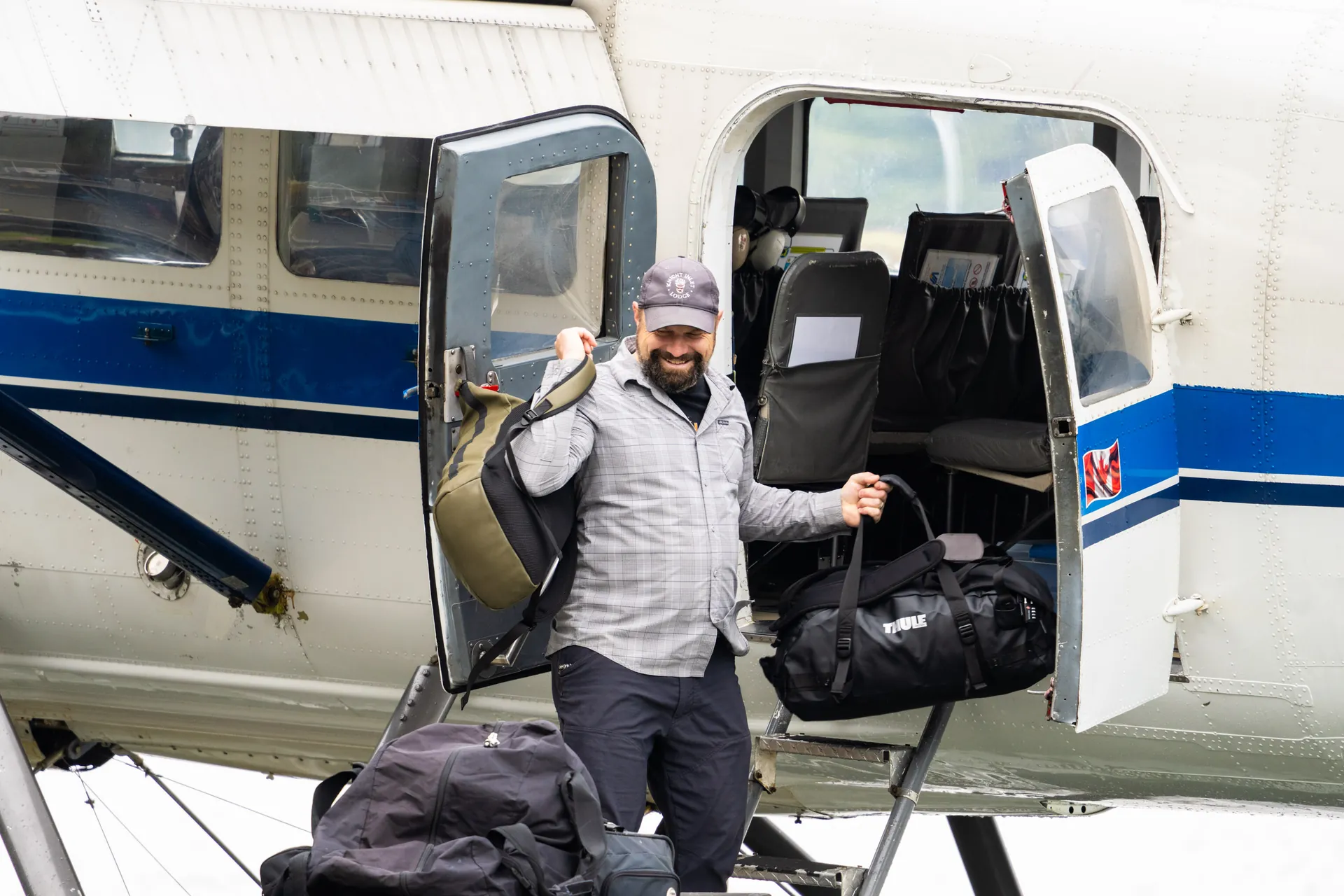
The floatplane, and the bag limit
Campbell River at nine in the morning: the plane, the luggage cart, and the guests learning that no carry-on means no carry-on. The camera bag goes in the hold with everything else.
Fourteen kilograms in a soft bag, weighed on the dock. Pack the camera body and the long lens; leave the tripod. The stands have rails and the boats have gunwales.
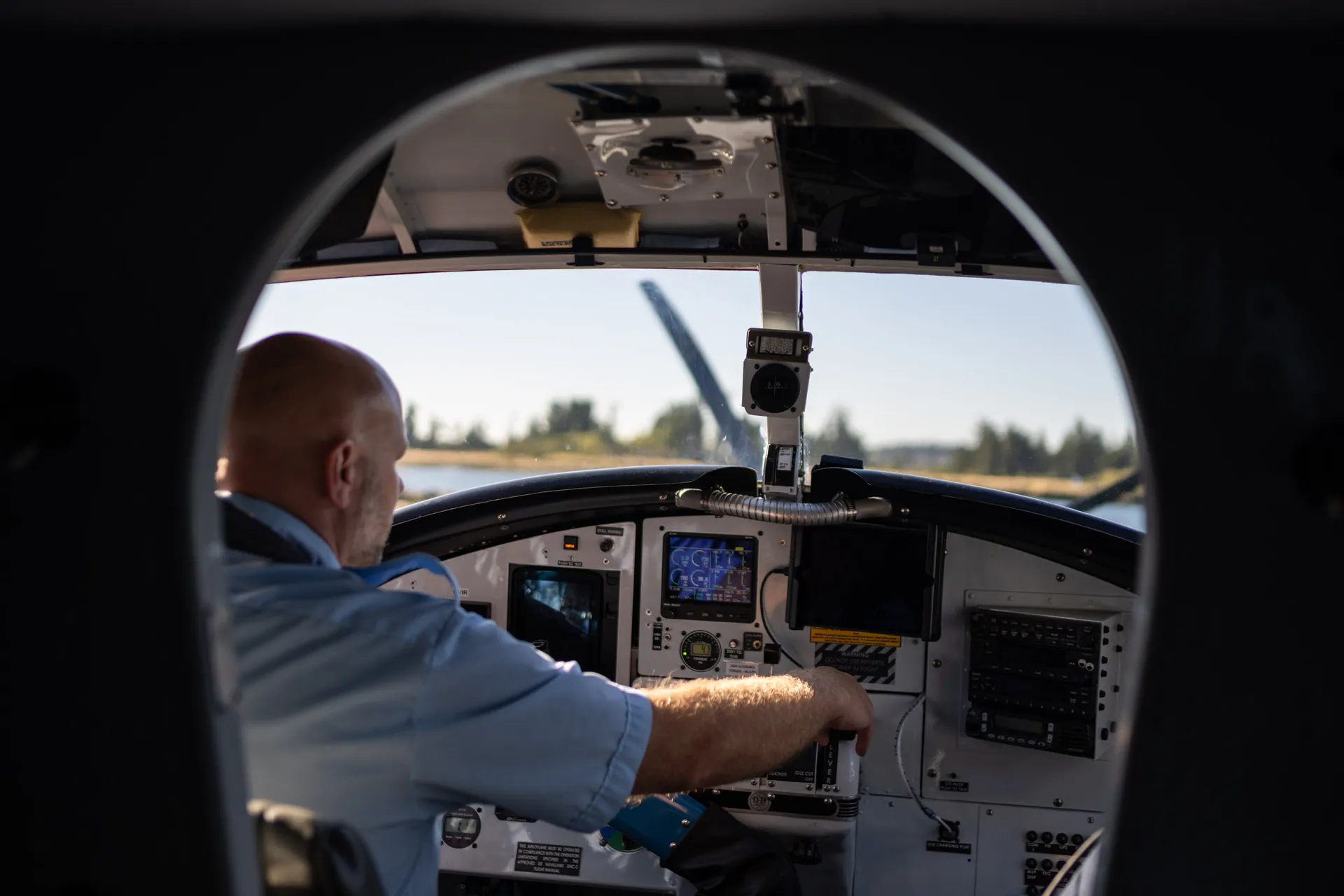
The whole journey in order, step by step, and the packing list, are on their own pages.
What it costs
Bear viewing is sold as an all-inclusive package: transfers, the room, meals and the daily outings. At Knight Inlet, 3 nights (two at the lodge, one in Campbell River) is $4,365 per person in summer 2027 and $4,755 in the spring and fall bear seasons, double occupancy, plus 5% GST; longer packages run to seven nights and single rooms cost more. Wildcoast’s Whales and Bears week is $4,043 before GST on the grizzly departures. Berry Island prices on enquiry by dates and party size. Gratuities, the bar, licences where relevant and getting to the gateway town are on top everywhere.
The trip calculator prices a party for a chosen season with the extras the tariff leaves out, and what it costs, ranked puts every experience on the record on one footing.
What to bring, and what to shoot with
The lodges lend rain gear and rubber boots, so the packing list is shorter than you expect: layers, a warm hat even in August, binoculars, and a camera with reach. From the boat, 400 mm is the working length and 600 is not too much; from the stands, 70 to 200 mm covers most of it and a second body saves changing lenses with a bear at ten metres. Bring more cards than you think and a dry bag for the boat days. The packing list has the whole thing with boxes to tick, and the camera kit I carry on a boat is on its own page.
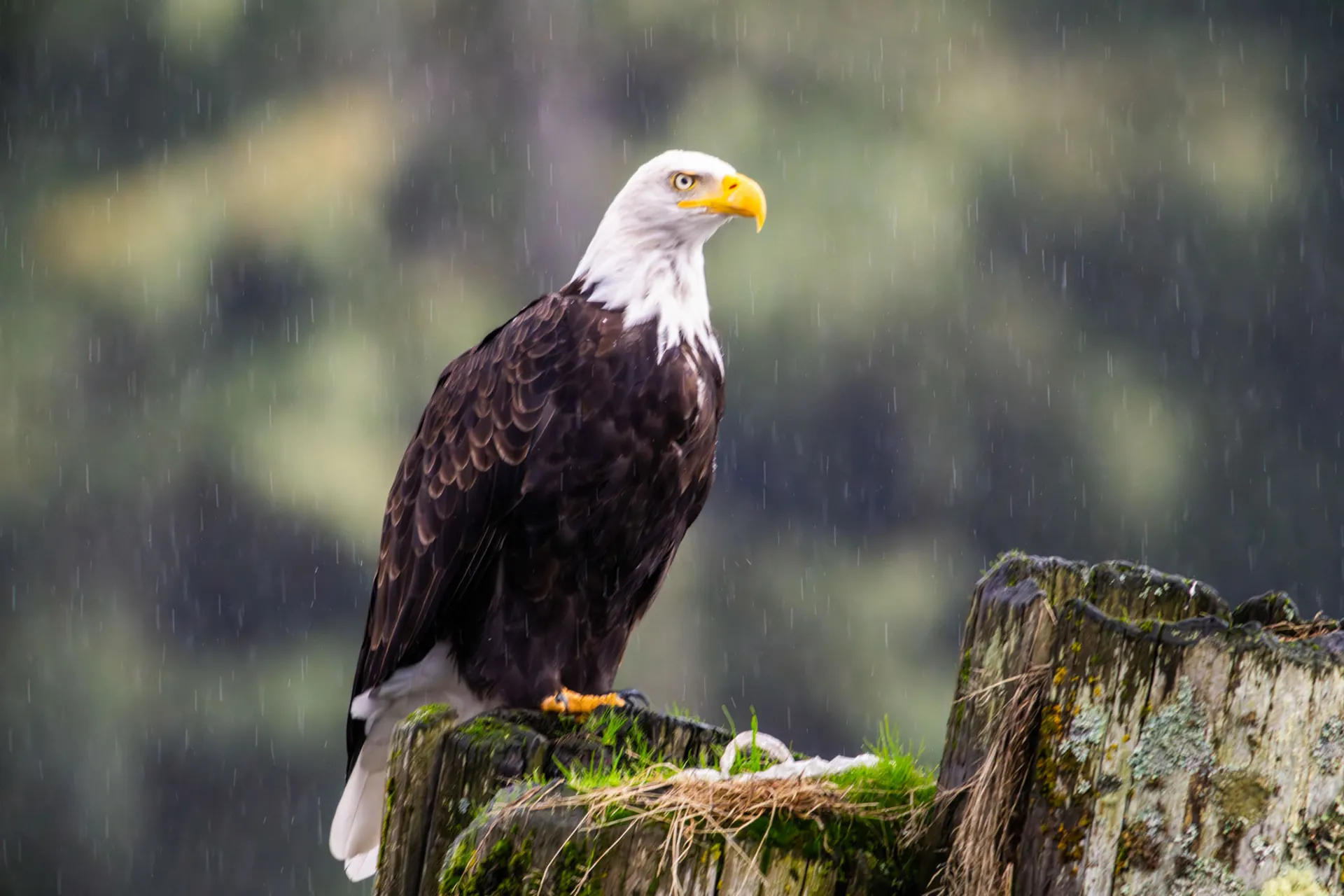
The last thing to know is the one nobody puts on a website: the bears are not the whole trip. The floatplane in, the guides, the food, the hour at the end of the day on the deck with the cove going flat, the eagles on the carcasses, the seals following the boat. The bear is the reason you come. The rest is why people come back.