


The argument for Hurst Island was made decades ago by a man in a red toque. Jacques Cousteau rated this reach of Queen Charlotte Strait the best cold-water diving on earth, and the reasoning still holds. Tide squeezes through Browning Pass twice a day hauling nutrients up from the deep, and the walls respond with a density of life that looks like a coral reef which lost its way north: soft corals, yellow sponges, anemones stacked white on white, kelp combing the current.
I went out for a week with God’s Pocket Resort to shoot their film and build their virtual tour, which means I saw the operation from both sides. As a photographer being fed dangerously well, and as the man hauling a tripod up a boardwalk at golden hour.

Ten nautical miles from Port Hardy, off grid, boat or seaplane only, and run on the same family footing for more than twenty-five years.


The cove does the work
Hurst Island sits behind its own weather. The cove is tucked out of the strait, which is why the resort can run a dive schedule in months when the open water outside would not allow one.
Generator power, boardwalk commutes, and the only light pollution is the galley window. There is no road on the island and no reason for one.
The diving runs on the water’s terms. The crew read the tide tables the way other people read the news, and every drop at the pass is planned to slack. The same current that feeds the walls will not negotiate with a schedule.
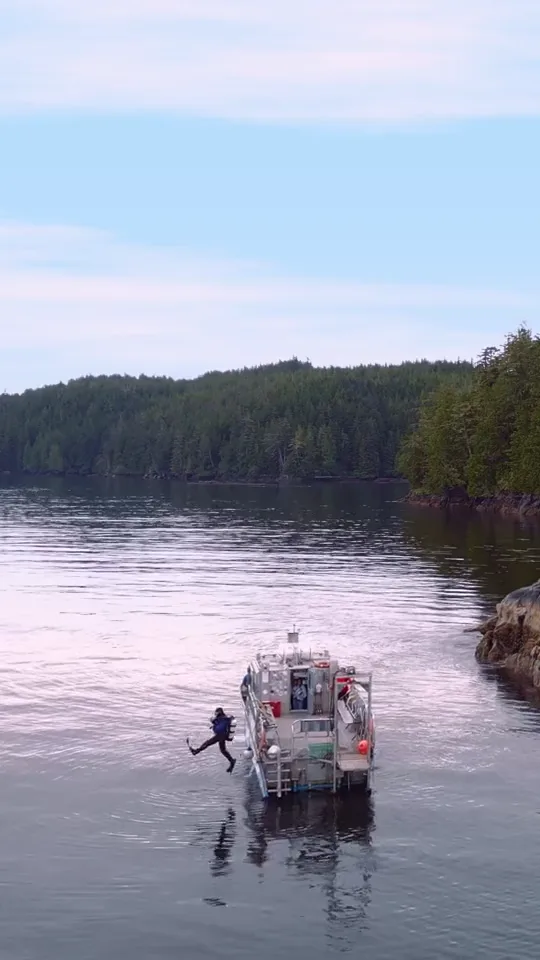
Slack tide is an appointment the ocean makes and you keep. Everything else on the day is arranged around it.
The boat carries a nitrox membrane system and a high-speed lift, and between dives it becomes a floating lunch room with the best view in the strait.
What I did not expect
The food. Charcuterie on the dock after the second dive. Pizza night under the hand-painted welcome sign. A panna cotta that would survive scrutiny in a city restaurant, served to people in fleece with mask lines still on their faces.


Slack tide is an appointment the ocean makes and you keep. Everything else on the day is arranged around it.
Field note

Everything is arranged around the tide

Simple, and right
Wood-panelled rooms, a corner bed set into a window bay with the dock below, and somewhere warm for everything to dry. That last one matters more than it sounds after four days in a drysuit.
The window bay is where the batteries charged and the plans got made. I have stayed in far more expensive rooms that were worse at both.
Surface intervals belong to the island
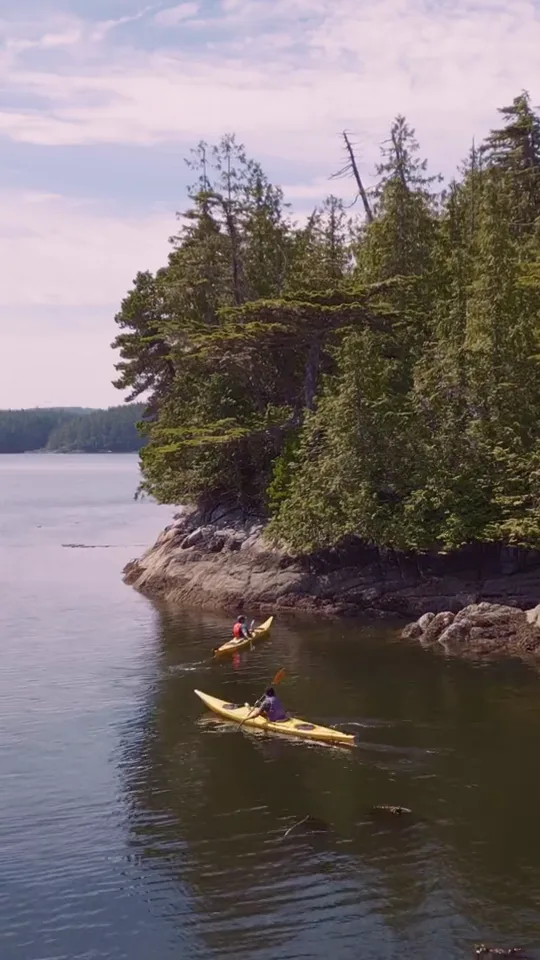
There are kayaks on the beach and a trail into second-growth forest hung with moss. I spent one slack-tide gap chasing light through the trees and another photographing a raven that ran the dock like a foreman. The cat, asleep in a camera bag it had annexed, declined to be directed.


Management
The raven works the dock like a foreman, and has clearly been doing it longer than most of the staff. It is entirely unbothered by a lens.
The cat had annexed a camera bag by the second morning and declined all direction thereafter. Every remote lodge has one animal that outranks the guests.
Be honest with yourself about the cold. This is eight-degree water and drysuit country, and the winter weeks, when visibility stretches past twenty-five metres, reward divers who have made peace with dry gloves. But no warm-water reef will show you a wall like Browning’s in January, and no liveaboard sends you to sleep with rainforest fifty feet from your pillow.
The 360 degree virtual tour I built for the resort walks the boardwalk, the cabins and the dive deck, and is worth ten minutes before you book.
