
I have stayed at Knight Inlet Lodge twice, once in the salmon-run autumn that made it famous and once in spring for the light and the cubs, and both times I paid attention to the things a brochure leaves out: how the rooms sleep, what dinner is actually like, whether the guides know the bears by name, and what the bill comes to once the extras are in. This is the verdict page. The Salmon Clock is the story of the autumn; this is whether you should go.
The short version. If you want to stand above a river full of grizzlies with a camera and have the whole thing, plane included, arranged for you, this is the place, and the fall platform season is the reason it sells out a year ahead. If you want a private bear, wifi, a road out, or a bed for under $1,000 a night, it is not.

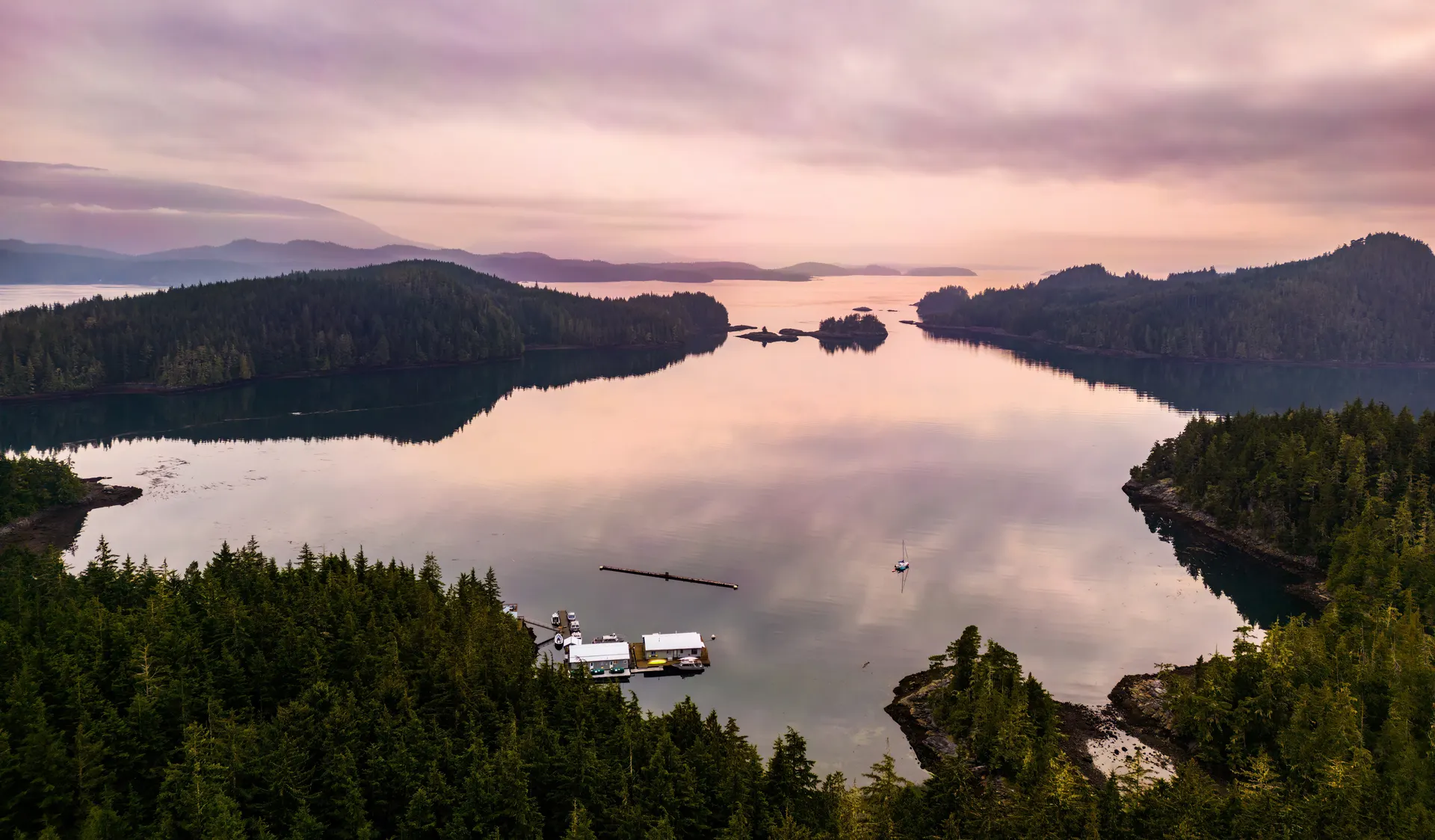
A floating lodge tied to a wall of rainforest at the head of a cove with no road within a day of it. Everything about the place follows from that: the plane, the generator, the bag limit, the price.
Who it is for, and who it is not for
It is for people who want the bears above everything else and are prepared to be organised around them: one flight a day, a fixed departure, a day cut into four blocks, dinner at a set hour. It suits photographers, couples who want one big wildlife trip done properly, and families in summer, when the programme leans to kayaks and hikes and the rates are lowest.
It is not for anyone who needs to stay in touch. There is no wifi and no cell coverage, on purpose, and the lodge does not apologise for it. It is not for people who want to wander: every land tour crosses about 200 metres of rocky shoreline you have to manage unaided, and there is nowhere to walk to on your own. And it is not the trip for anyone who resents sharing a viewing stand, because in September you will.
The rooms
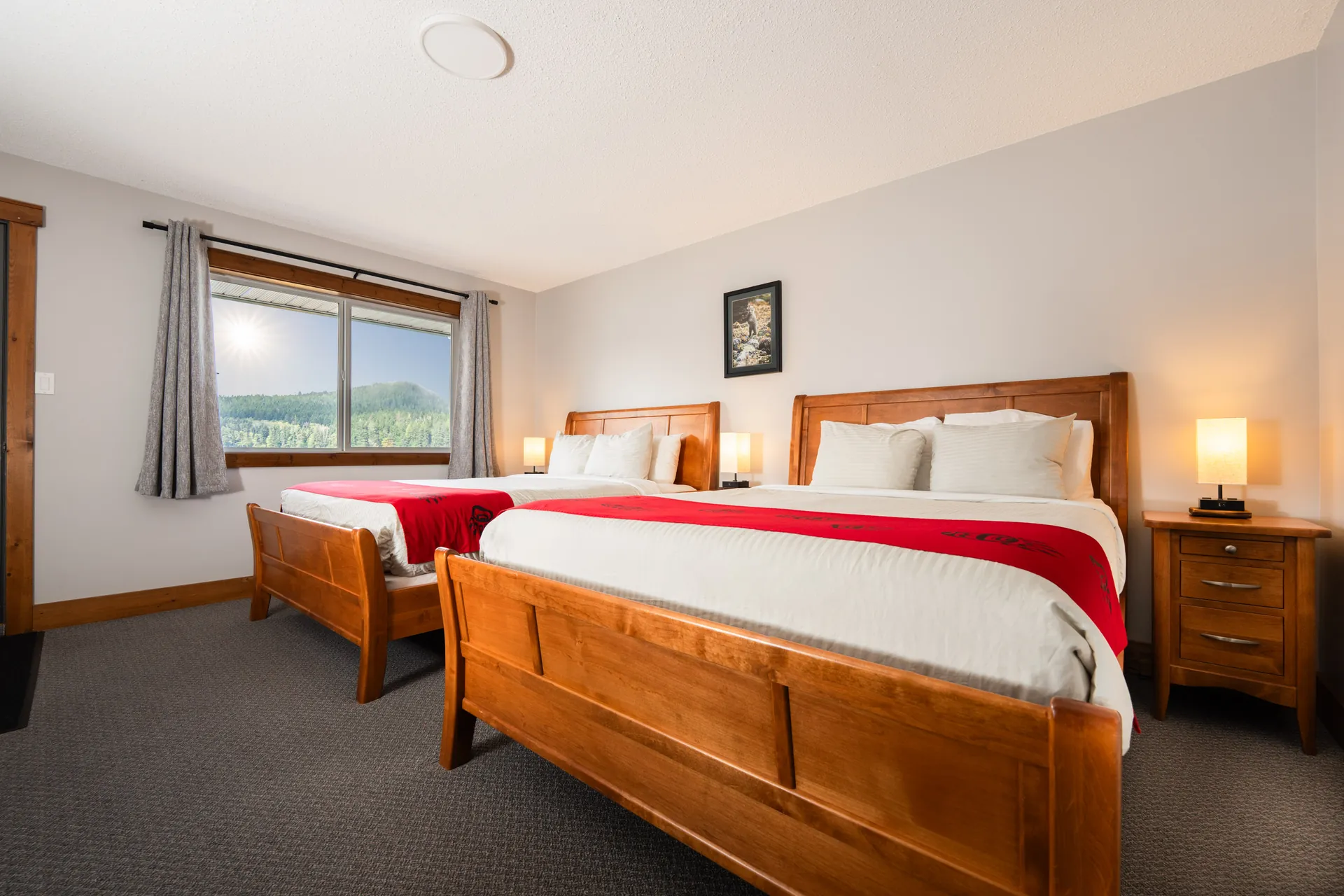
Eighteen rooms on the floats: fourteen with two queen beds and four family rooms with a queen and two twins, the family rooms a $100 a night upgrade where they are available. Eight face the water and ten face the shore, given out in booking order, and the shore-facing rooms sometimes have a bear in the window, which is a better consolation than it sounds. Every room has its own bathroom and shower. The beds are timber, the blankets red, and the cove is outside the window.
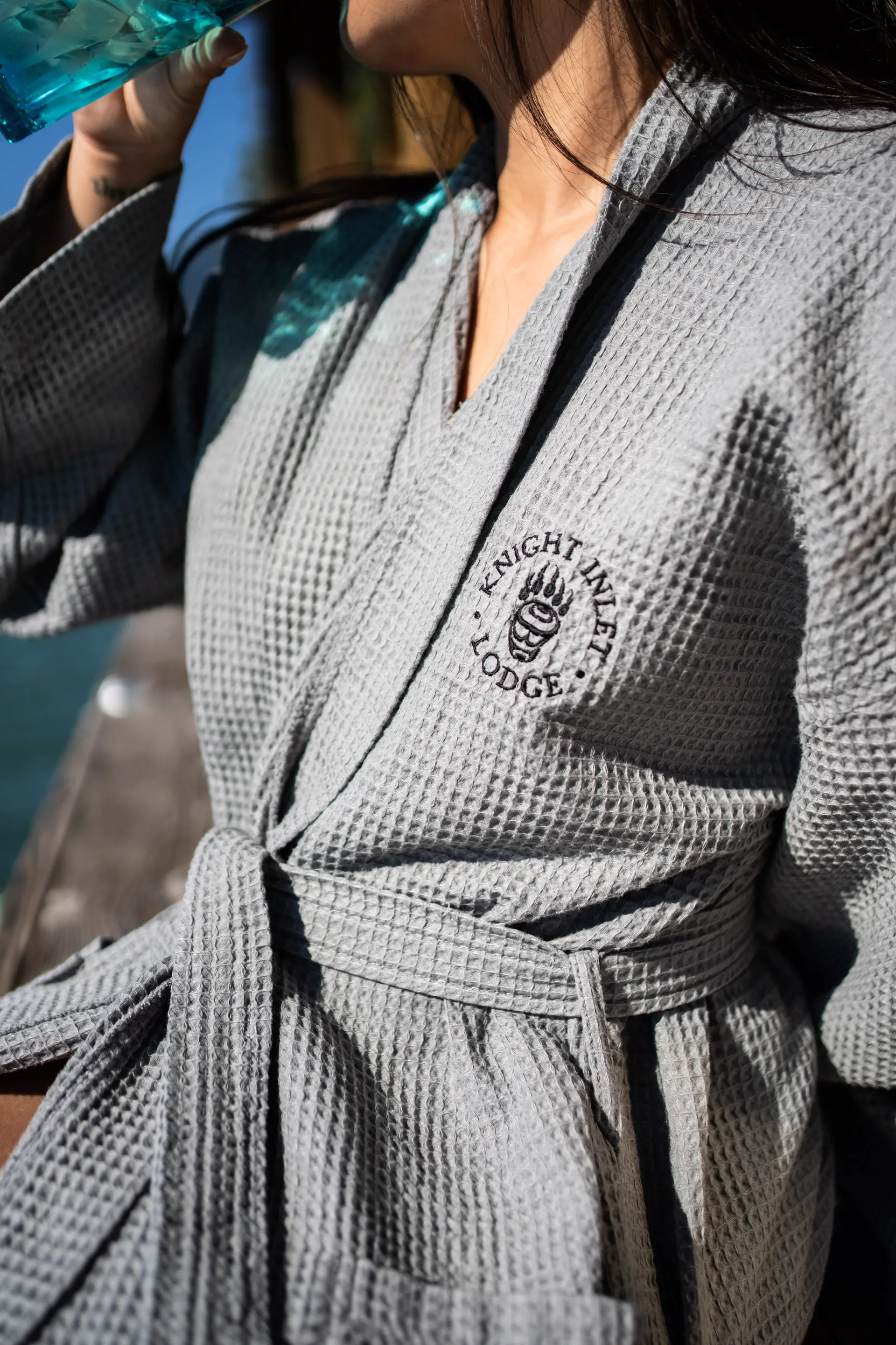
Comfortable, not grand
The rooms are warm, dry and quiet, which after a day in a boat in the rain is the whole brief. The window is the point. Ask for water-facing when you book and accept that it is allocated in order.
A robe on the door, standard outlets by the bed, a proper walk-in shower. The generators go off at ten and the batteries carry the lights and chargers overnight; the hot water does not, so shower before ten or after half past four.
The food
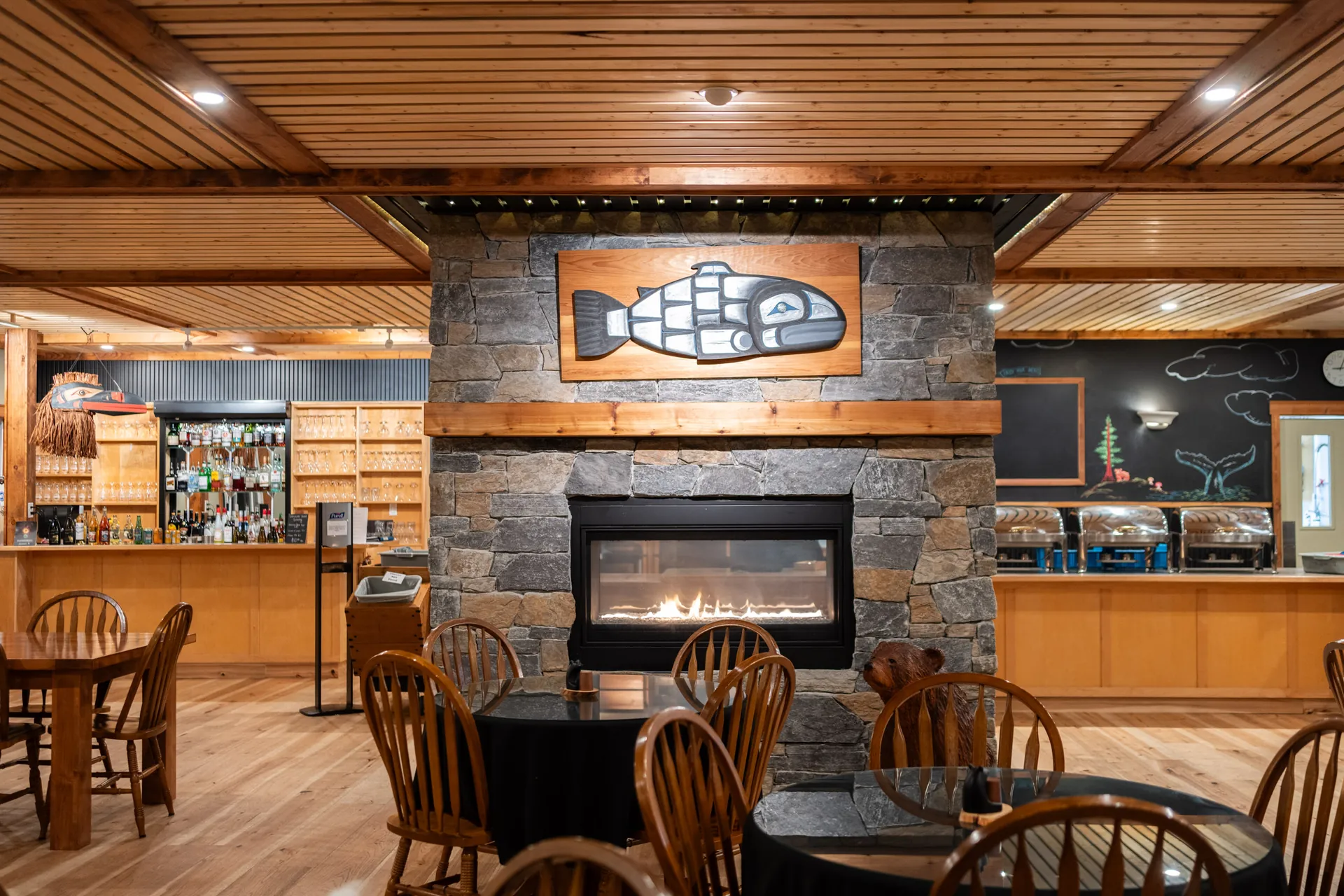
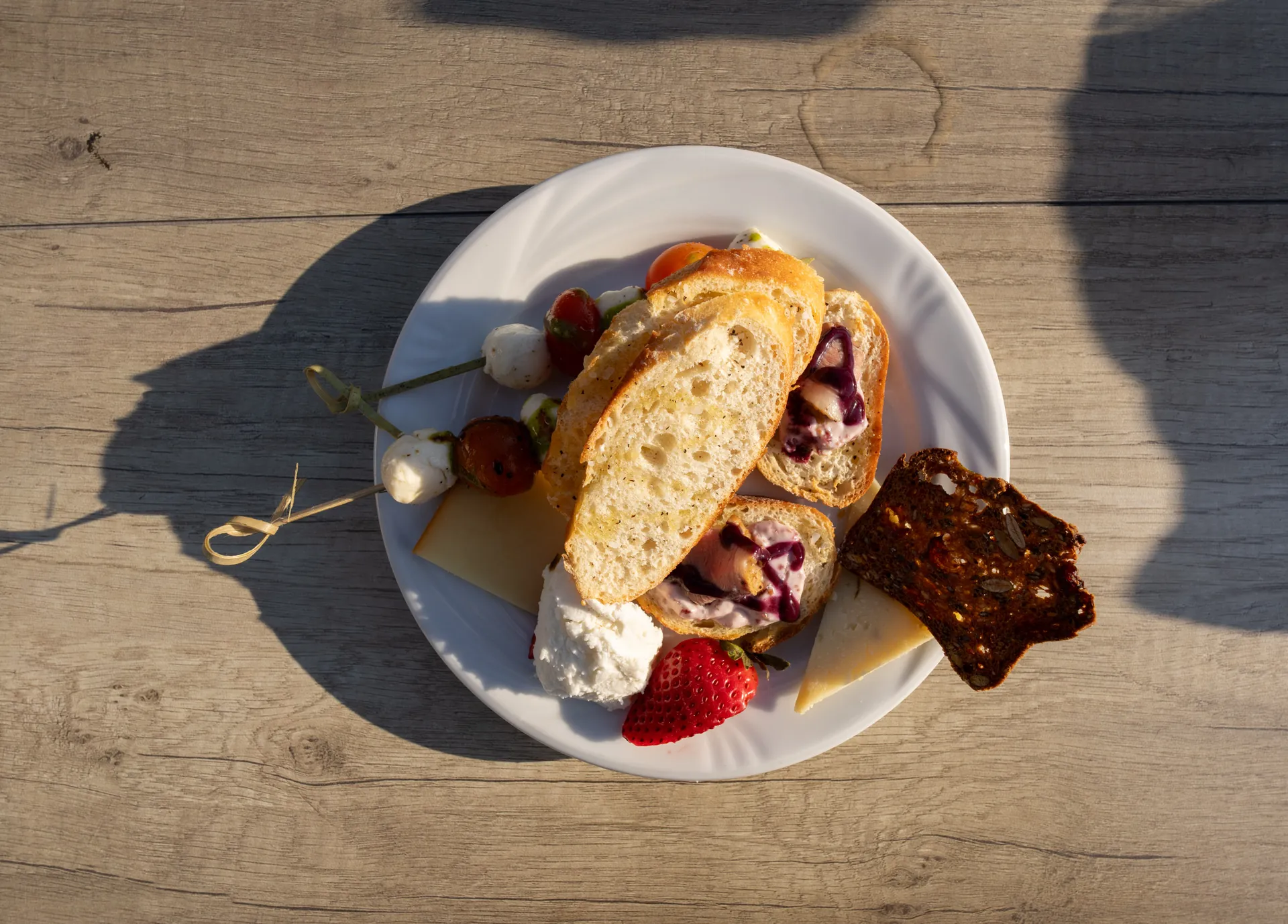
Chef-cooked, three meals a day and snacks between, with the prawns and Dungeness crab coming out of the cove itself. Dinner comes with red and white from BC wineries; the bar carries Vancouver Island beer, Shelter Point spirits and cocktails, and that is on your account. There is proper coffee all day. Everything is flown or boated in, so dietary requirements need a week’s notice. It is very good lodge food rather than a restaurant, and after two seasons I cannot remember a poor plate.
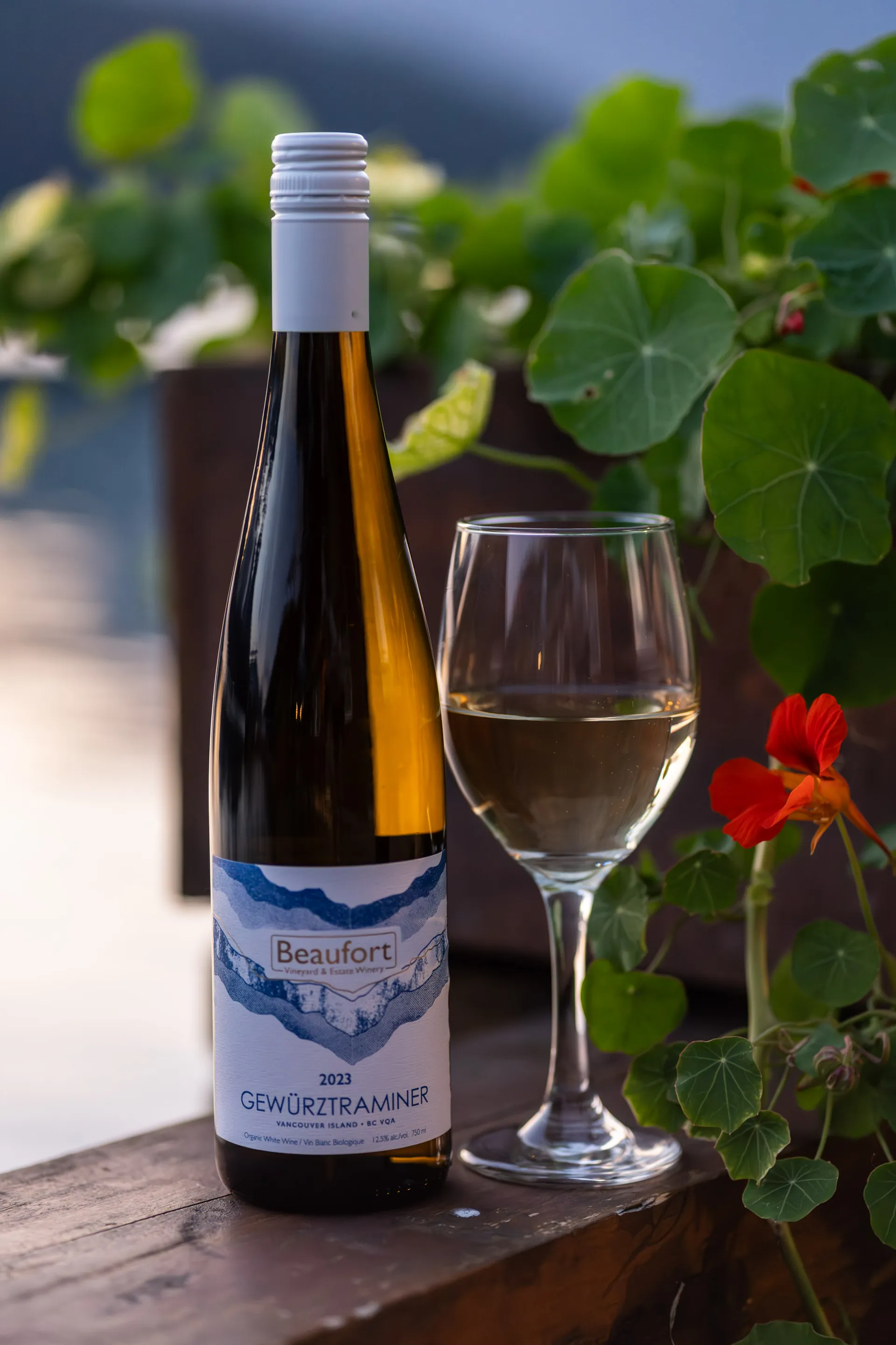
BC wine, and the crab from the cove
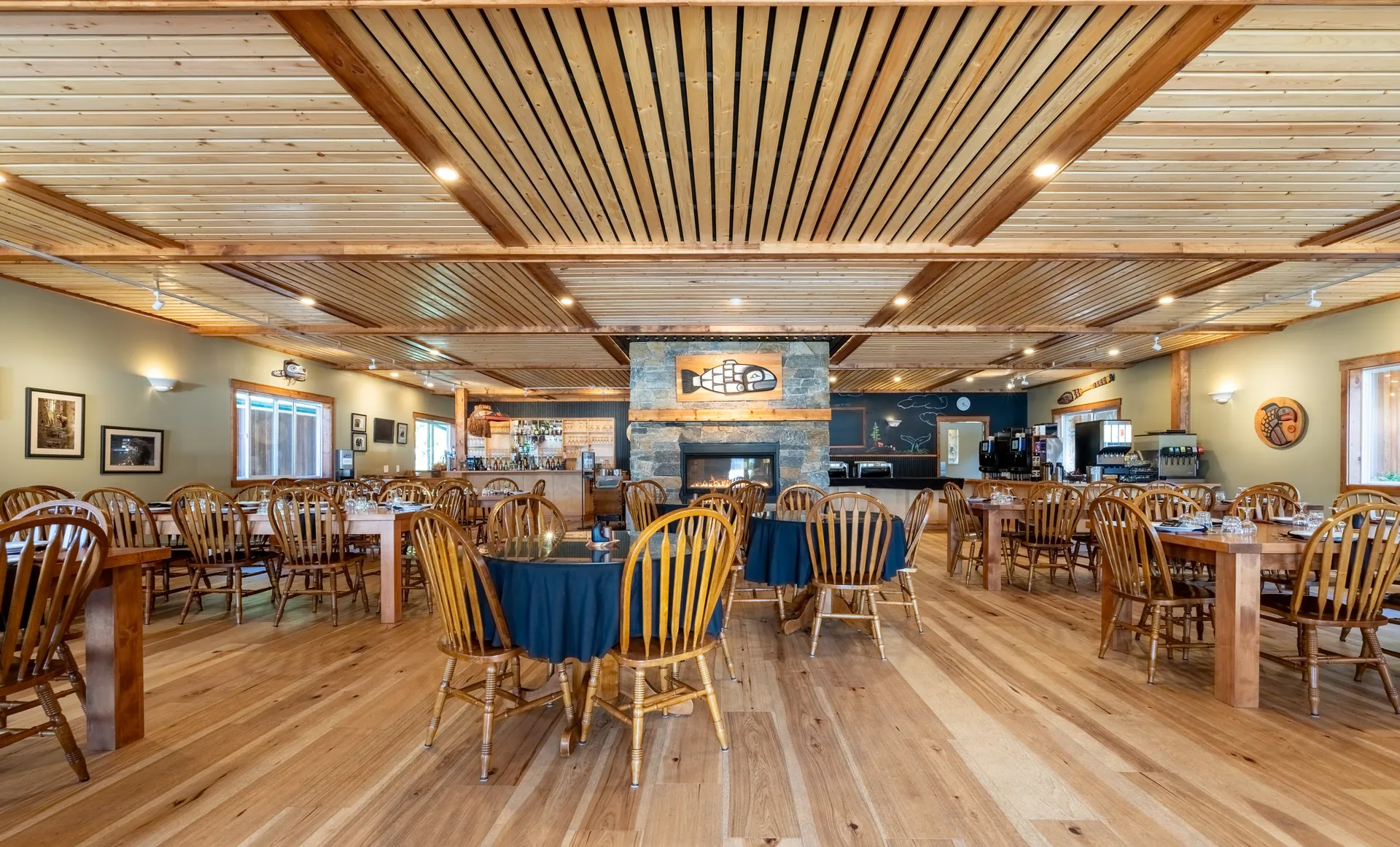
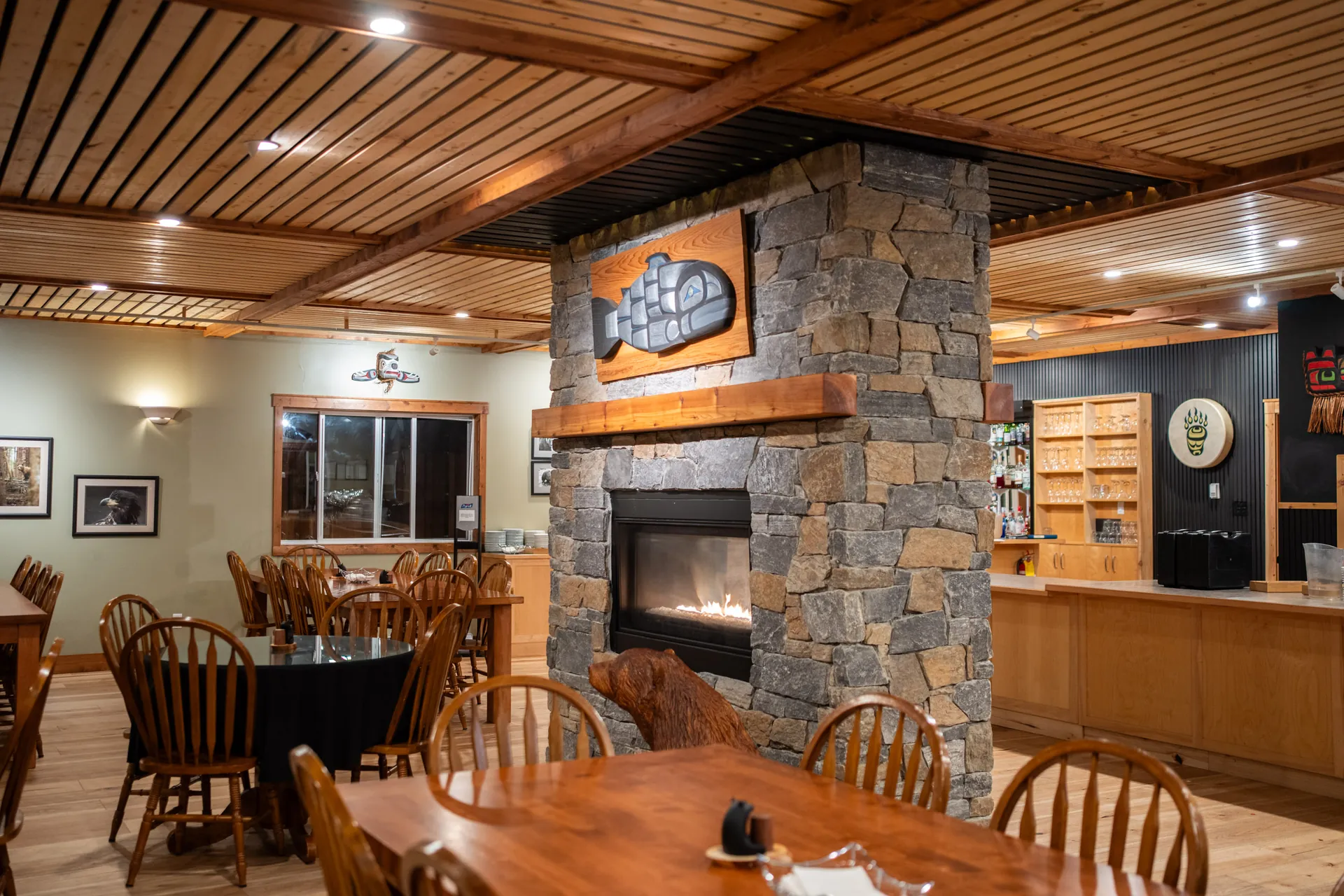
Tables set with blue cloths under a timber ceiling, the day's sightings traded across the room. It is the social hour of the trip, and the day's bears get argued over.
The glass of white on the deck rail before dinner is the hour I would fly back for. Wine with dinner is in the price; anything else at the bar goes on the tab.
The guides
This is what you are paying for, and it is the part I would defend hardest. The guides know the Glendale bears as individuals: which sow has the cubs this year, which young male has just been pushed off the best rock, which bear gets more room. They brief on the dock before every outing, they end an encounter the moment a bear’s behaviour changes, and the evening programme after dinner is where you learn what you were looking at. Six to twelve people go on each outing, chosen the evening before at the manager’s desk.
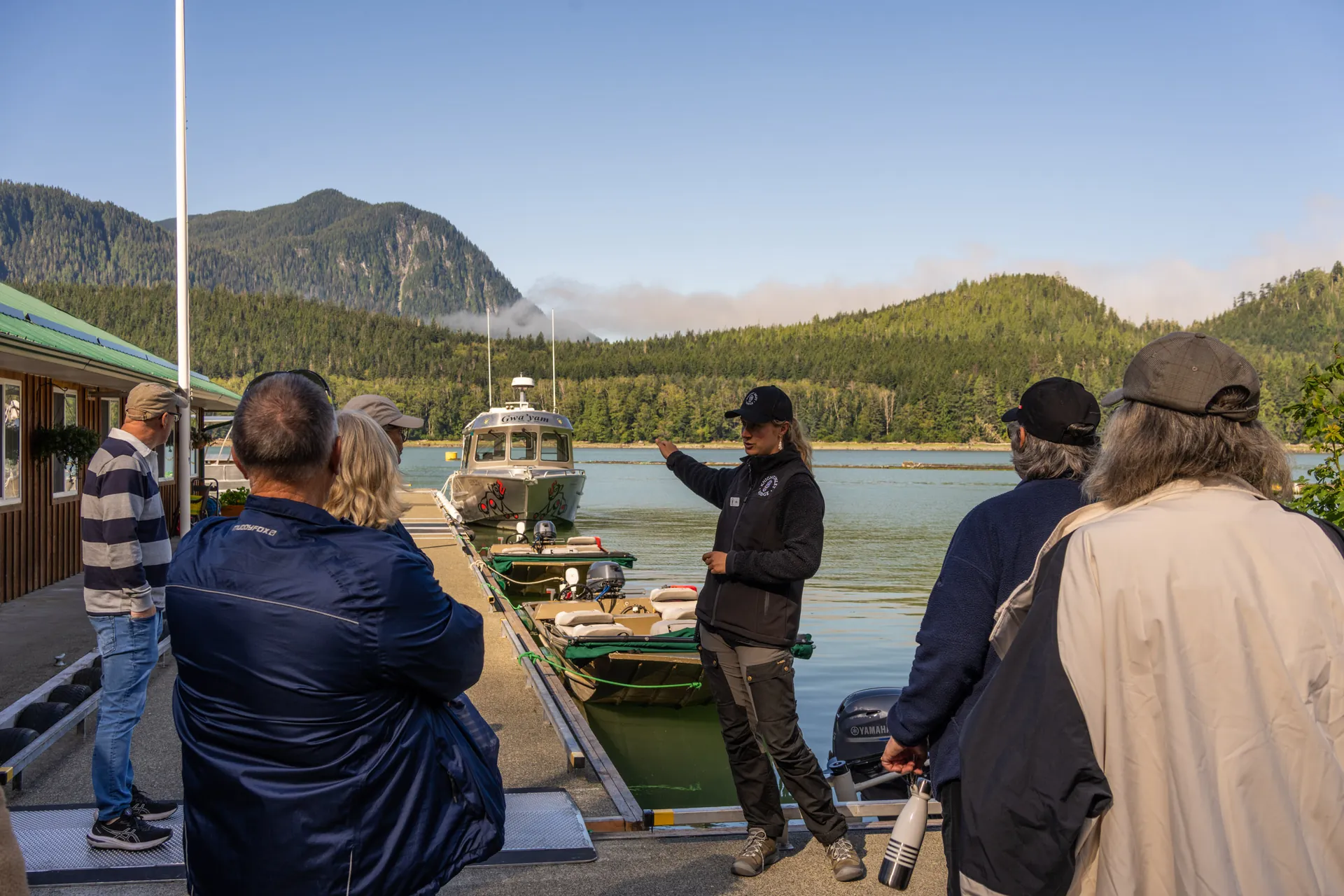

The dock briefing
Every outing starts here: where the boats are going, what the tide is doing, what to do if a bear comes down to the water while you are on the shore. It takes five minutes and it is the safety system.
Ask which bear is which and which ones get more room, and the guide will tell you. That knowledge is what a small lodge buys you, and it is the thing I valued most across the two seasons.
The boat season against the platform season
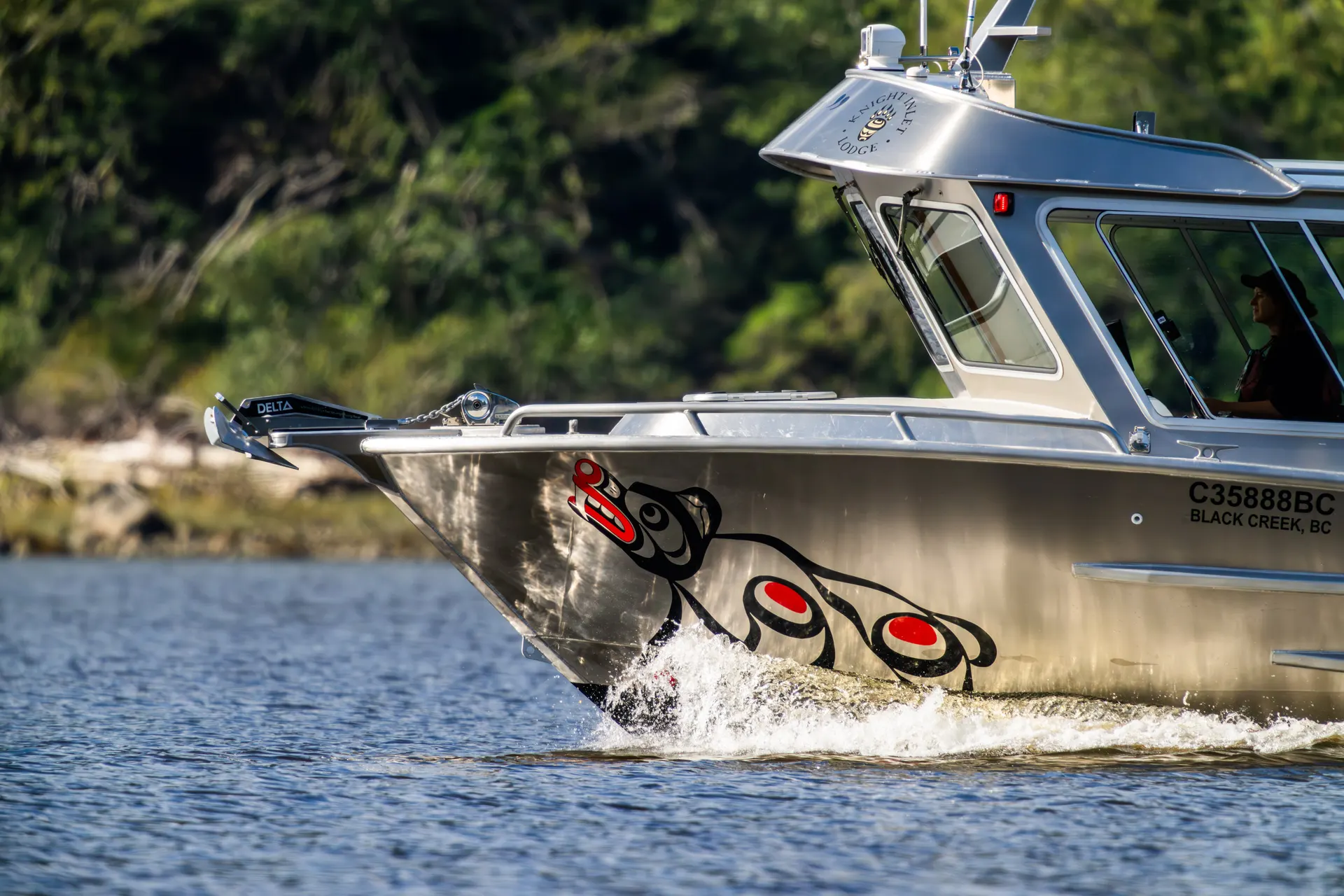
These are two different trips at the same address. From 21 May to 30 August the viewing is from boats: a small open boat idling along the estuary at high tide while the bears graze the sedge, or in midsummer working the tide line for crabs and the slopes for berries. You are ten to thirty metres off, the bear decides how long the encounter lasts, and on a good spring morning you have one to yourself. On a poor one you have seals and eagles and a long look at the sedge flats.
From 31 August to 15 October the pink salmon are in the spawning channels and the lodge moves everyone to the viewing platforms above the Glendale River, one guaranteed trip a day. The bears fish directly below the stands. Dozens of them at peak, in the lodge’s words, and my own frames agree. It is the closest most people will ever be to a wild grizzly and it is the reason September goes first.
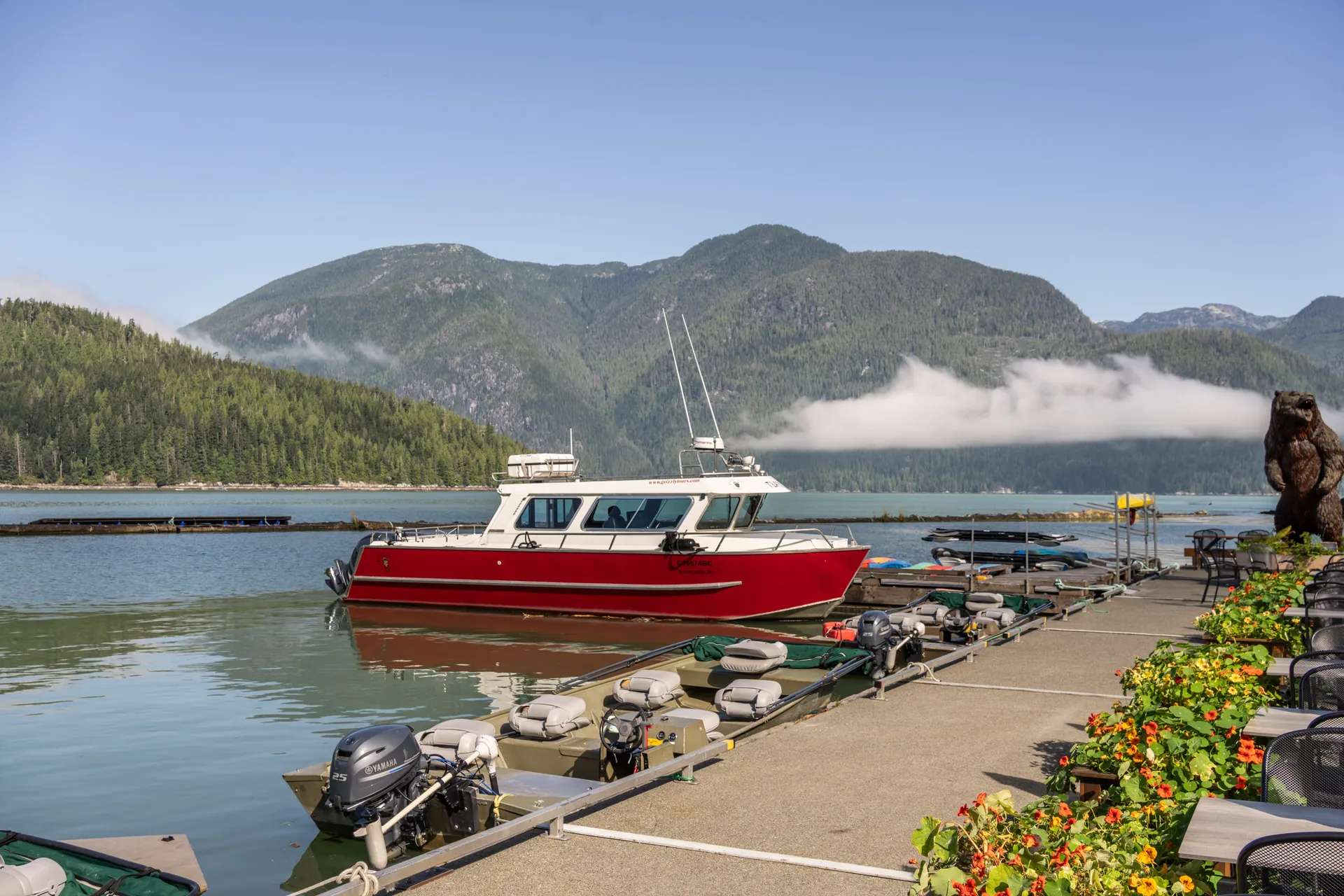
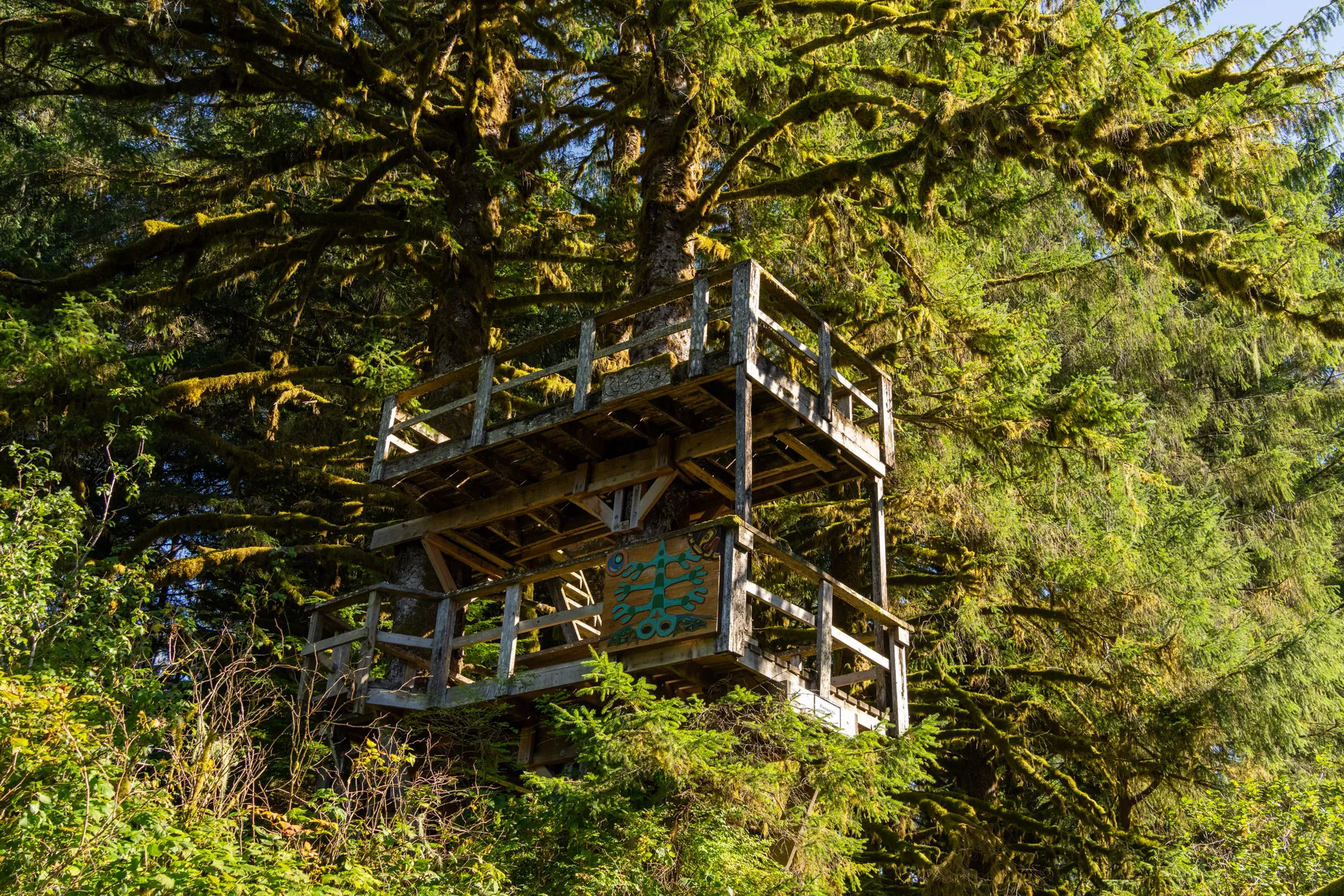
Spring boat, autumn stand
Spring is the red boat at the dock in the mist, a 400 mm lens and patience. Fewer guests, cubs from late May, and the chance of a bear with nobody else in the cove. Not the spectacle, and I went back for it anyway.
Autumn is timber steps into the trees and a rail to rest the 70 to 200 on. It is safer than the boat, because nothing about you is in the bear's space, and it is busier, because everyone on your outing is on the same stand.


What each season gives the camera
Spring: a bear sitting up in the estuary grass in low light, at a distance that needs the long lens and rewards it. The pictures are quieter and, to my eye, better.
Autumn: a moss-roofed stand at the end of a boardwalk and bears at ten metres. The pictures are easier and there are more of them. Which you want is the whole booking decision.
The floatplane, and the bag limit
Every package starts with a night at the lodge’s partner hotel in Campbell River, and it is not optional, because the plane leaves at nine and one flight a day is all the bears get. Check in at the Vancouver Island Air dock at 8:15, in the air at 9:00, on the water at Glendale Cove about 9:45, and back in Campbell River by around 11:15 on the last day. The limit is 14 kilograms per person in a soft bag, stowed in the floats, and there is no carry-on: whatever you keep on you, camera included, has to fit the seat pocket. If the weather grounds the plane the lodge moves you by boat, which is slower and can reshuffle a day. There is no refund for weather, so do not book an onward flight for the afternoon you come out.
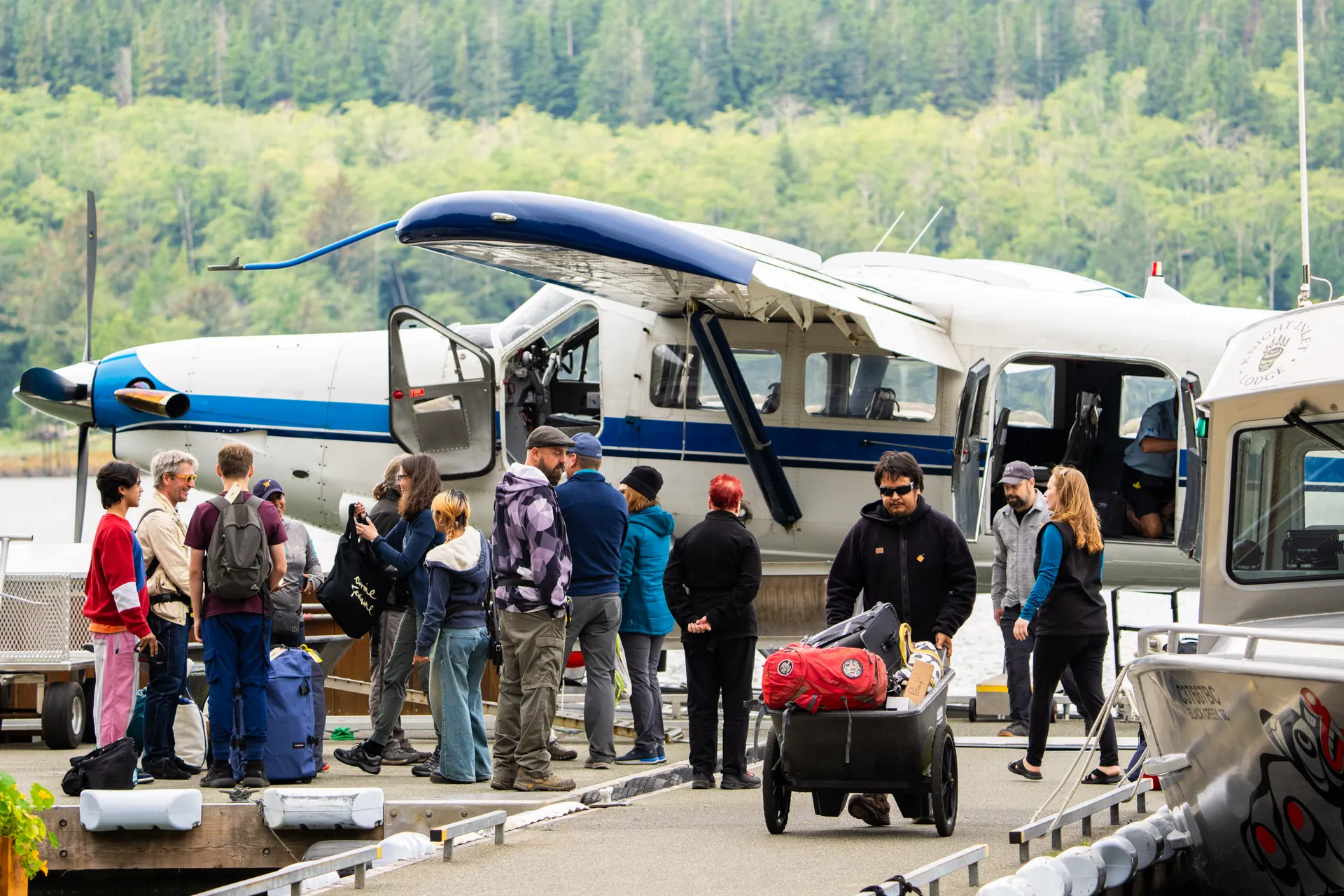
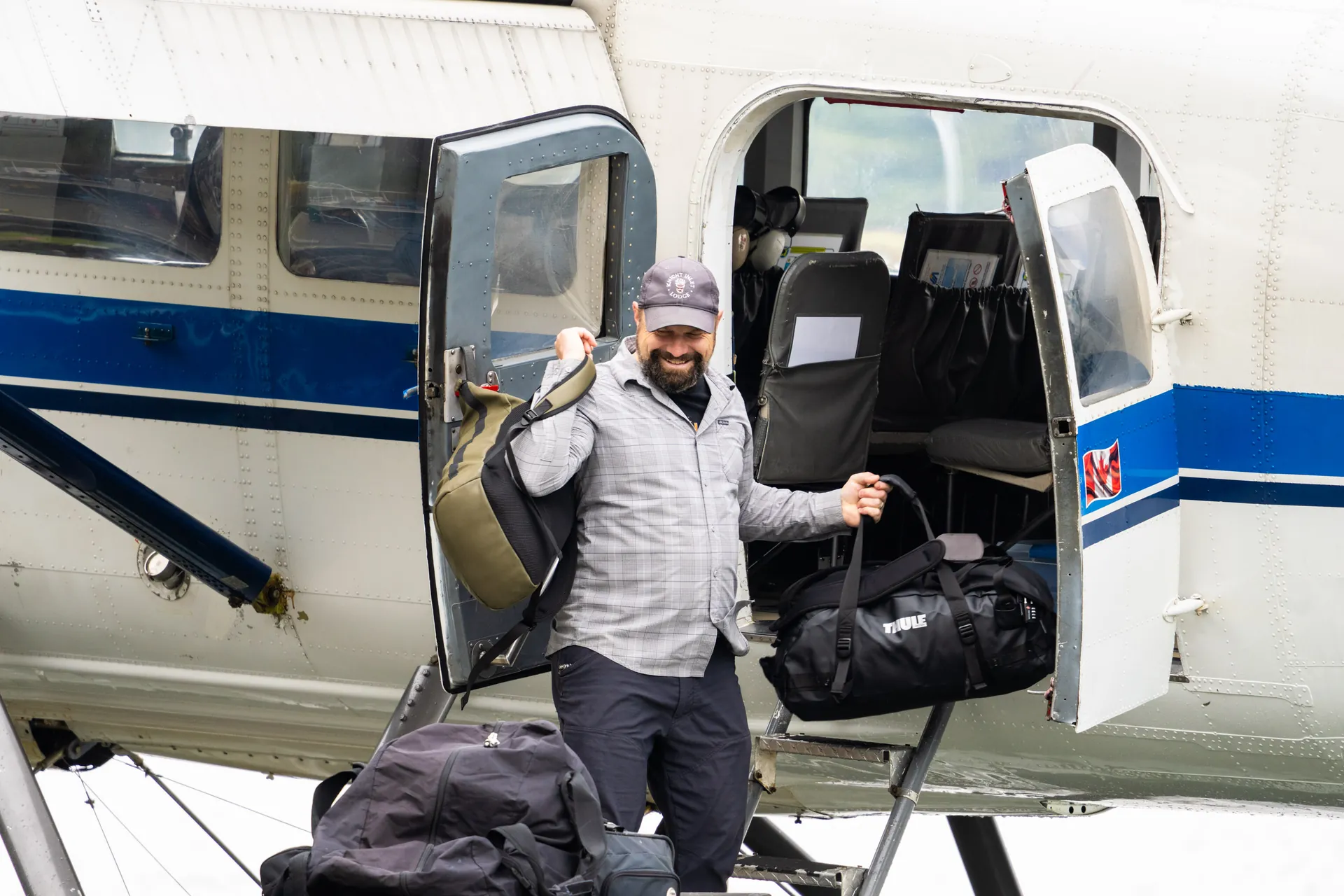
Fourteen kilograms, no exceptions
The bags are weighed on the dock and go in through the door you see here. The camera bag goes with them. Pack the body and the long lens, leave the tripod; the stands have rails and the boats have gunwales.
The lodge lends rain gear, rubber boots and binoculars, which is what makes the limit workable. The packing list has the rest, and the journey in order is on its own page.
What it costs
From the lodge’s own 2027 direct-booking tariff, read in September 2026. The 3-night package, two nights at the lodge and one in Campbell River, is $4,365 per person double in summer and $4,755 in the spring and fall bear-viewing seasons, plus 5% GST. Single occupancy is $6,290 in summer and $6,895 in spring and fall; a child aged 6 to 16 sharing with two adults is $4,010 and $4,360. The pre-night hotel, the floatplane, every meal, wine with dinner, every excursion and the $150 environmental fee are in the price. Longer packages run to seven nights. Gratuities are not built in from 2027; they were $40 a person in 2026.
The deposit is $500 per person, refundable up to 90 days out, and the balance is due 45 days before the package starts. Inside 90 days the deposit is kept, inside 45 days it is 60 per cent, inside 30 days it is everything, and the lodge is plain that no refund is issued for weather, transport or wildlife. Buy the insurance.
What would make it better
Honesty is what a review is for, so. The stands in September are shared with your whole outing group, up to a dozen people, and a photographer who wants an empty rail will not get one; the spring boat is the answer to that, at the cost of the numbers. There is no wifi and no signal, and while I agree with the reason, three days out of reach is a real cost to some people and the lodge should say so louder. The generators run from half past four in the morning to ten at night, and the hot water is off overnight. The day is timetabled around one plane and one tide, and the cancellation terms are strict. And it is expensive, in the way anything reached only by floatplane and staffed by people who know every bear is expensive. None of that changed my verdict. All of it should be known before the deposit goes down.
Compared with
Berry Island Lodge in the Broughton Archipelago is the closest alternative on this record: full-day bear viewing from small boats in the inlets and estuaries, twelve rooms on a rocky point, a water taxi from Alder Bay instead of a plane, and packages priced on enquiry rather than from a tariff. The autumn platforms above the Glendale River are Knight Inlet’s alone; what Berry Island has is a smaller house, twelve rooms with a fireplace in each, and a full day on the water. Wildcoast Adventures is the budget route to a grizzly: a day on the Homalco Nation’s Orford River platforms folded into a 7-day kayak trip at $4,043 before GST, with the rest of the week under canvas in Johnstone Strait. The side-by-side is at Berry Island against Knight Inlet, and the best grizzly lodges in BC puts the whole coast in order.
Two seasons in, my rating is a sentence rather than stars: for the fall platforms it is the best grizzly trip I know how to book, and for everything else it is a very good lodge with an unusually good address.
Verdict
Book September if you can and a year ahead if you want it. Book late May if you would rather have the cove to yourself and a longer lens. Either way, check the availability chart before you fall in love with a date, because June and September go first, and the lodge says so itself.